Pale cornflower
Centaurea pallescens Delile
Description
The pale cornflower (Latin: Centaurea pallescens Delile) is a resilient herbaceous species belonging to the Asteraceae family. Known for its ability to thrive in harsh environments, it has become a subject of interest for those studying xerophytic plant physiology and sustainable land management in arid climates.
The species originates from the Mediterranean basin, specifically arid territories across North Africa and the Middle East. It has successfully adapted to sandy, rocky, and low-nutrient soils, making it a key component of desert vegetation where water availability is a severely limiting factor for the majority of agricultural crops.
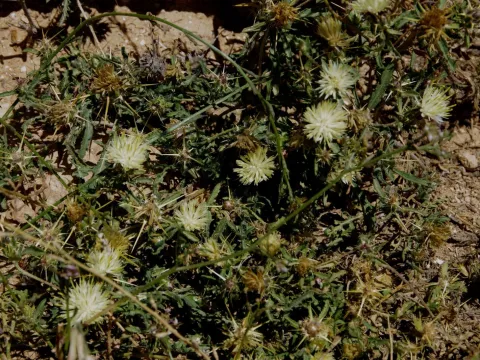
Botanically, Centaurea pallescens exhibits adaptive features such as dense trichomes (hairs) on the leaves, which minimize transpiration, and a deep taproot system for moisture extraction. The flower heads are typically pale, ranging from cream to light yellow, and provide a late-season bloom that is critical for local insect populations in hot, dry environments.
In terms of cultivation, this crop demands full sun exposure and excellent drainage. It does not tolerate waterlogging, which is a major physiological stressor for the species. Proper agrotechnology involves avoiding over-fertilization and ensuring that the plant is not suppressed by competing invasive weeds during its establishment phase, as it is relatively slow-growing.
The economic and ecological utility of the pale cornflower lies in its potential for land reclamation and as a reliable honey-producing plant. It supports biodiversity in extreme climates where other plants cannot survive. Common threats include various fungal pathogens such as rusts, which can proliferate if humidity levels rise unexpectedly, and occasional infestations by seed-feeding insects.
Photo gallery