Ragusa knapweed
Centaurea ragusina L.
Description
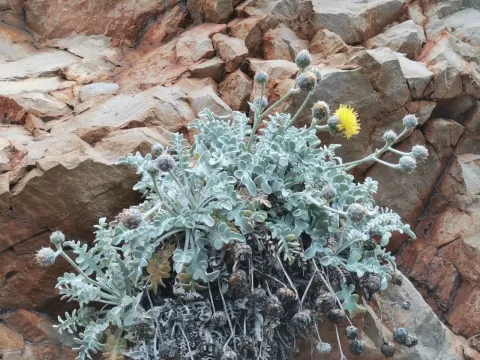
Ragusa knapweed (lat. Centaurea ragusina L.) is a perennial herbaceous plant belonging to the Asteraceae family. Renowned for its stunning silvery-white foliage and bright yellow blooms, this species is a highly sought-after plant for specialized ornamental horticulture and xeriscaping.
Native to the rocky coastal regions of the Adriatic, particularly Croatia, this plant is naturally adapted to harsh, arid environments. Its evolutionary history has endowed it with remarkable resilience against strong winds, salt spray, and prolonged summer droughts, making it a robust candidate for difficult planting sites.
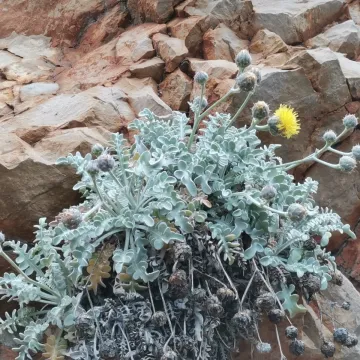
Botanically, the species is characterized by its basal rosettes of deeply pinnatisect leaves. The dense, felt-like hairs covering the foliage serve as a structural adaptation to minimize water loss. During the flowering phase, it produces conspicuous yellow capitula that stand in stark contrast to the silvery leaf mound.
Successful cultivation requires environmental conditions that mimic its Mediterranean origin. This includes full sun exposure and well-draining, stony, or calcareous soils. Irrigation should be minimal, as the plant is extremely susceptible to root rot in waterlogged substrates. Proper aeration and drainage are the primary pillars of successful management.
In terms of хозяйственного (utilitarian) use, it is primarily employed as a decorative element in rock gardens and Mediterranean-style landscapes. Its low maintenance profile and high drought tolerance make it an ideal choice for water-wise landscaping projects. Growers should monitor for common pests like aphids and ensure adequate air circulation to prevent fungal pathogens.
Photo gallery