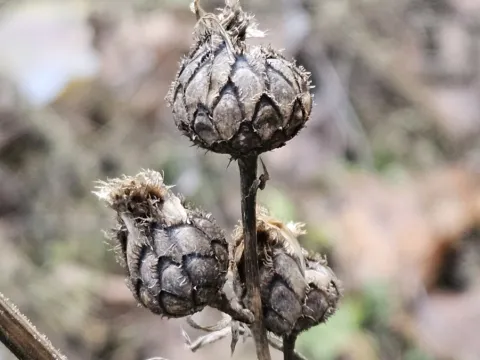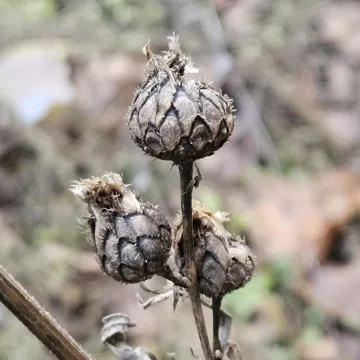
Greater knapweed
Centaurea scabiosa L.
Description
Greater knapweed (Centaurea scabiosa L.) is a perennial herbaceous plant belonging to the Asteraceae family. While frequently categorized as an invasive or competitive weed in commercial crop production, it is increasingly valued in conservation agriculture for its role in maintaining ecological balance.
This species is native to Europe and parts of Asia, thriving in meadows, grasslands, and road verges. It prefers well-drained soils, particularly those with a limestone base, and demonstrates remarkable drought resistance due to its deep taproot, making it a reliable plant in varying environmental conditions.
Botanically, it reaches heights of 40–100 cm and is distinguished by its rough, pinnately divided leaves and deep purple flower heads. It blooms extensively throughout the summer months. These flowers are highly attractive to various pollinators, including bees and butterflies, which are essential for the pollination of adjacent agricultural crops.
In terms of agricultural management, controlling this plant in fields requires consistent cultivation techniques such as deep ploughing and strategic crop rotation to disrupt its root system. However, in low-intensity farming or buffer zones, it is encouraged as a permanent ground cover that provides shelter for beneficial insects and predators of crop pests.
Common uses and agricultural benefits:
- Apiculture: Highly rated for its long flowering period and high nectar yield.
- Pollination support: Acts as a magnet for beneficial pollinators.
- Soil health: Its extensive roots help in soil stabilization and structure improvement in marginal lands.
The plant is susceptible to several pests, including weevils that feed on the seeds and foliage. Pathological threats are primarily fungal in nature, such as powdery mildew and rust, which typically occur in overgrown or poorly aerated fields, suggesting that proper land maintenance and periodic thinning are necessary for healthy plant populations.
Photo gallery