Squarrose knapweed
Centaurea virgata Lam.
Description
Squarrose knapweed (Centaurea virgata Lam.) is a perennial herbaceous plant belonging to the Asteraceae family. Known in agricultural and environmental studies as an invasive species, it is recognized for its ability to dominate native plant communities and agricultural lands, significantly reducing the biodiversity and productivity of fields.
The origin of this species is traced to the Mediterranean basin, the Caucasus, and Central Asia. It has successfully invaded diverse habitats, ranging from dry rangelands to disturbed roadsides. Its rapid spread is primarily driven by its adaptability to arid conditions and high seed production rates, which allow it to persist under various environmental pressures.
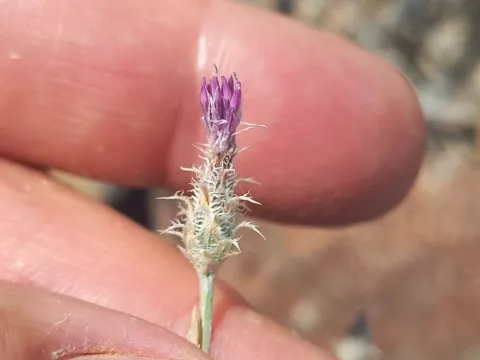
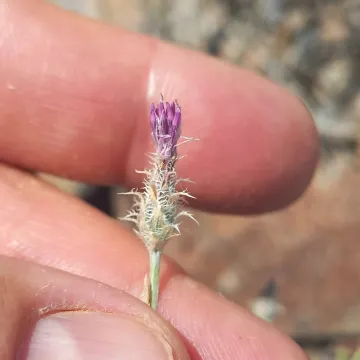
Botanically, the plant is characterized by a deep taproot system, which provides excellent drought tolerance, and a highly branched stem. The leaves are deeply lobed and often pubescent, helping to retain moisture. The flower heads are equipped with rigid, sharp spines, which act as a mechanical defense mechanism against herbivory.
In terms of agricultural management, soil requirements are minimal, as the plant thrives in poor, gravelly, or sandy soils. Effective agronomic control measures include integrated vegetation management, such as chemical control during the rosette stage and mechanical removal before the seeds mature, alongside promoting competitive native vegetation.
Host use is limited, as the plant's spines make it unpalatable and potentially harmful to livestock, reducing the value of forage areas. While it acts as a late-season nectar source for some pollinators, its invasive nature outweighs these benefits. Disease and pest pressure are generally low, with biological control research focusing on specific rust fungi and insect agents.
- Deep taproot system
- Sharp spiny bracts
- High drought and heat tolerance
- Significant invasive potential
Photo gallery