Chinese yam
Dioscorea polystachya Turrcz.
Description
Chinese yam (Dioscorea polystachya Turcz.) is a perennial herbaceous vine belonging to the Dioscoreaceae family. It is widely cultivated for its edible tuberous roots, which are esteemed not only as a food staple rich in starch and proteins but also as a vital ingredient in traditional medicine due to their bioactive compounds.
Native to East Asia, particularly China, the plant has a long history of cultivation. Its distribution has expanded significantly, and today it is grown in various temperate and tropical regions across the globe. The crop is known for its resilience and ability to thrive in diverse environments, provided the growing season is sufficiently long.
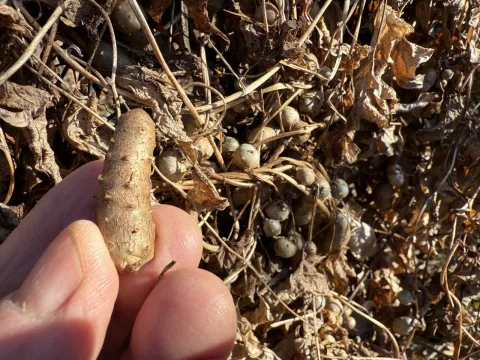
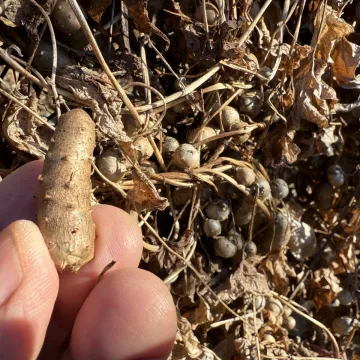
The plant features a climbing stem that requires structural support for optimal growth. Morphologically, the most significant part of the plant is its long, tuberous root system, which can grow deep into the soil. Many varieties also produce aerial bulbils (small tubers) in the leaf axils, which are commonly utilized for propagation purposes in agricultural practices.
Successful cultivation requires specific environmental conditions. Chinese yam thrives in deep, loose, and well-drained sandy loam soils, which allow the tubers to elongate without physical obstruction. The crop requires a sunny location and is sensitive to waterlogging, as excessive soil moisture can quickly lead to root rot and other physiological disorders.
Agricultural management involves deep tillage, proper weed control, and potentially the use of trellises. Growers should be vigilant against common pests such as root-knot nematodes and wireworms.
- Common fungal diseases include anthracnose and various types of soft rot.
- Effective management includes crop rotation and the use of certified, disease-free planting material.
Photo gallery