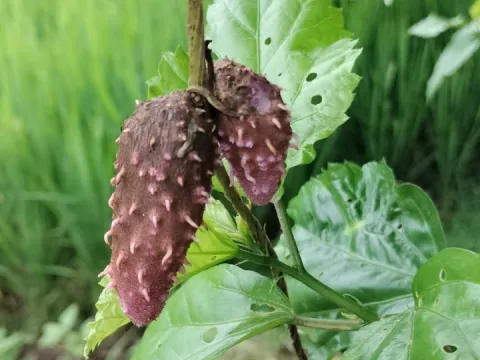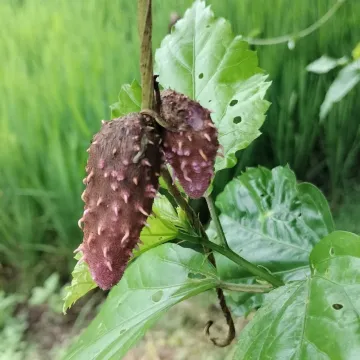

Greater yam
Dioscorea alata L.
Description
Greater yam (Dioscorea alata L.) is a perennial climbing plant belonging to the Dioscoreaceae family. It is one of the most widely cultivated species of yam globally, playing a critical role in the food security of tropical regions due to the high energy content of its large, starchy tubers.
The species originated in Southeast Asia and has since been introduced to tropical zones across Africa, the Pacific Islands, and the Americas. It thrives in high-temperature environments with distinct wet seasons, which are essential for supporting the plant's rapid vegetative growth and subsequent tuber enlargement.
Botanically, the plant is characterized by its twining vines with quadrangular, winged stems, which give it its common name. The underground storage organs, or tubers, can vary greatly in shape and size, often featuring a dark, rough skin and internal flesh that may be white, pink, or purple depending on the specific cultivar.
Successful cultivation requires deep, friable, and well-drained soils rich in organic matter. Farmers typically provide wooden or bamboo trellises to support the vines, as vertical growth is necessary for optimal photosynthetic efficiency. The plant is propagated vegetatively using tuber segments or bulbils that develop in the leaf axils.
Beyond its culinary utility as a staple starch source, the crop is utilized for medicinal purposes and starch production. Key challenges in maintaining crop health include:
- anthracnose disease causing significant foliage loss;
- nematode infestations in the root zone;
- mosaic viruses reducing overall yield;
- pests such as the yam beetle which damage the harvested tubers.
Photo gallery