Chufa
Cyperus esculentus L.
Description
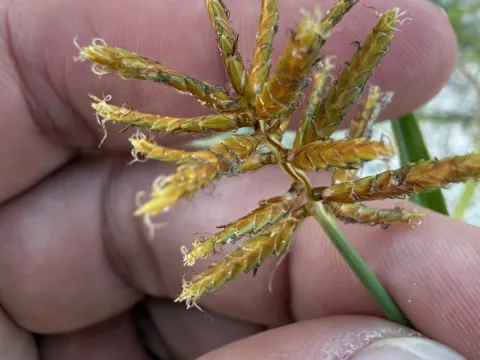
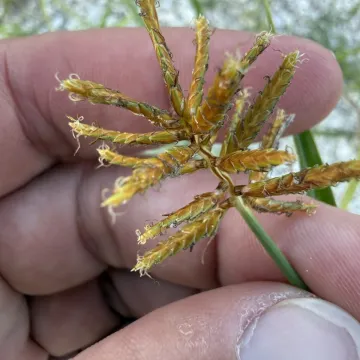
Chufa (Cyperus esculentus L.), widely known as tiger nut or yellow nutsedge, belongs to the Cyperaceae family. It is a perennial herbaceous plant that produces edible tubers on its rhizomes. These tubers are highly valued in both food and agricultural industries for their nutrient-dense composition, including lipids, proteins, and sugars.
The plant originates from the Mediterranean region and Northern Africa. It has spread globally and is currently cultivated in Spain, parts of the United States, and tropical regions across Africa and Asia. Its adaptability to diverse climates has made it a subject of interest for both small-scale farming and large-scale industrial processing.
Botanically, Chufa is characterized by its grass-like appearance with narrow leaves and a fibrous root system. The essential part of the plant is the underground rhizome network, where the tubers form. These tubers are small, rounded, and typically have a nutty, sweet flavor, which is the source of their common name "tiger nut."
For successful cultivation, Chufa requires a warm climate with a long growing season. It performs best in loose, sandy, or well-drained soils, which allow for easier tuber development and harvest. Agrotechnical practices include consistent moisture management during the tuber-bulking stage and aggressive weed control to ensure the crop does not compete with invasive species.
Industrially, Chufa is primarily used to produce "horchata," a plant-based milk substitute, and high-quality vegetable oil. It also serves as an excellent livestock feed, particularly for poultry and swine, due to its high carbohydrate and energy content. Furthermore, the tubers are used as a specialized forage for game birds and wildlife management.
- Rich in oleic acid and dietary fiber.
- High energy yield per hectare.
- Adaptable to a wide range of soil types.
- Potential for sustainable bio-fuel production.
Common diseases affecting the crop include root rots and fungal infections, often triggered by waterlogged conditions. Pests such as wireworms and various soil-dwelling larvae can significantly damage the developing tubers, necessitating careful soil preparation and integrated pest management strategies to protect the harvest.
Photo gallery