Annual sedge
Cyperus compressus L.
Description
The annual sedge (Cyperus compressus L.) is an annual herbaceous plant belonging to the Cyperaceae family. In agronomy, it is recognized primarily as an invasive weed species that colonizes agricultural fields, irrigation canals, and disturbed moist soils, significantly interfering with crop development.
This species is native to tropical and subtropical regions across the globe, including parts of Africa, Asia, and the Americas. Due to its biological resilience, it has successfully established itself in various warm temperate climates. Its presence is particularly noticeable in rice paddies and irrigated vegetable production systems where moisture is consistently available.
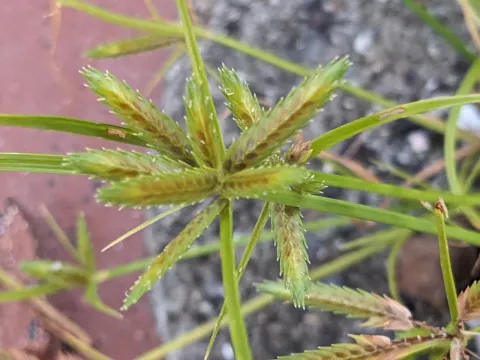
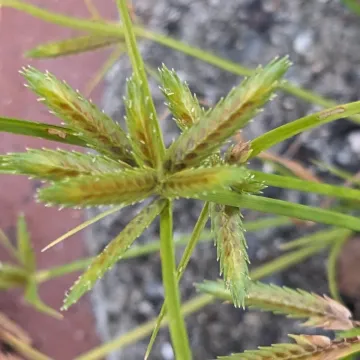
Botanically, Cyperus compressus is characterized by its tufted stems, which can grow up to 40 cm in height, and its grass-like, linear leaves. The inflorescence consists of distinct, laterally compressed, flat spikelets arranged in an umbel-like structure. This unique floral morphology is the primary identifier used by agronomists during field surveys.
The plant thrives in a wide range of soil types, particularly favoring moist, light-textured soils rich in organic matter. Its growth cycle is rapid, allowing it to produce seeds within a short window, which complicates long-term management. Agrotechnical control measures focus on preventing the plant from reaching the flowering stage through mechanical weeding and the implementation of crop rotation cycles.
While the plant has no direct commercial value, it is a significant factor in yield reduction for various grain and vegetable crops. Typical pests affecting it are rare, as the plant is highly robust; however, it can harbor generalist insects and soil-borne pathogens. Effective management relies on a combination of soil moisture regulation and targeted herbicide applications to break the life cycle.
Photo gallery