Yellow flatsedge
Cyperus flavidus Retz.
Description
Yellow flatsedge (lat. Cyperus flavidus Retz.) is a perennial herbaceous plant belonging to the Cyperaceae family. In the agricultural sector, this species is recognized for its utility in managed wetland systems and as a specialized crop for areas characterized by high water tables or consistent seasonal inundation, where standard crops often fail.
The plant originates from tropical and subtropical regions of Africa, Asia, and Australia. In agricultural practice, it thrives in warm climates with high precipitation. Its ability to colonize wet, nutrient-rich environments makes it an effective species for the stabilization of riparian zones and as a candidate for managed forage production in reclaimed swampy lands.
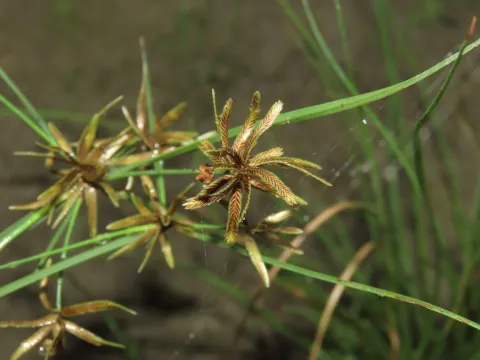
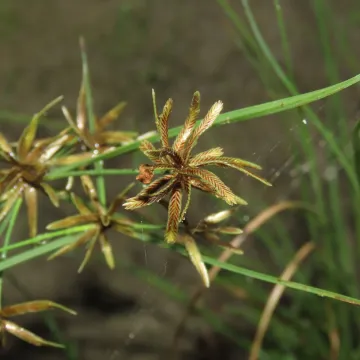
Botanically, Cyperus flavidus is defined by its triangular stems and narrow, tufted leaves that grow from a fibrous root system. The plant produces yellowish-brown spikelets grouped into umbel-like clusters. Its reproductive capacity is significant, allowing for dense colonization of the allocated plots, which contributes to high biomass yield per hectare.
The agronomic requirements for this crop focus on maintaining soil hydration and nutrient accessibility. While it is highly tolerant of wet conditions, optimal yields are achieved in fertile, loamy soils with a balanced pH. Management practices include soil aeration in the initial growth stages and organic fertilization to stimulate rapid development of the root system and foliage.
The agricultural uses of yellow flatsedge are diverse:
- Harvesting as biomass for specialized livestock feed.
- Utilization in phytoremediation projects to treat wastewater.
- Soil stabilization and erosion control in flood-prone agricultural areas.
In terms of plant health, the crop is generally resilient, though it may be susceptible to fungal diseases such as leaf rust and root rot when grown in stagnant, unventilated conditions. Pest pressure typically involves soil-dwelling larvae that feed on the rhizomes. Effective monitoring and occasional crop rotation are recommended to maintain long-term plot productivity.
Photo gallery