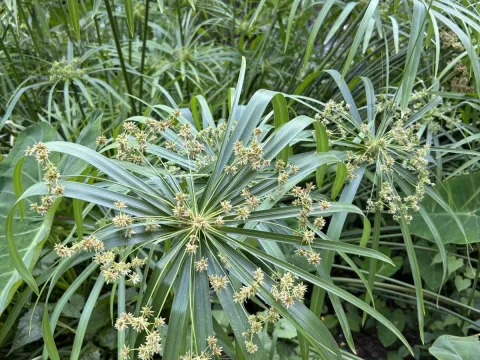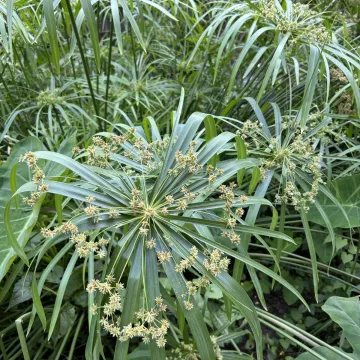
Cyperus alternifolius
Cyperus alternifolius L.
Description
Cyperus alternifolius, commonly known as the umbrella papyrus, is a perennial herbaceous plant belonging to the Cyperaceae family. It is widely recognized as a hydrophyte, meaning it is biologically adapted to grow in saturated soils or even standing water. This species is highly valued in both commercial horticulture and ornamental landscaping for its unique aesthetic and structural qualities.
The plant originates from the tropical regions of Madagascar. In its native habitat, it thrives in wetlands, riverbanks, and marshy areas, which informs its specific growing requirements in agricultural settings. While it is predominantly cultivated as a container plant in temperate climates due to its lack of frost tolerance, it is a staple of aquatic gardening in warmer, tropical regions.
Botanically, Cyperus alternifolius is characterized by tall, rigid stems capped with a whorl of long, narrow leaves that fan out like the ribs of an umbrella. The plant possesses a robust, creeping rhizome system that supports vigorous growth. Its flowers are small and inconspicuous, cluster-like, and emerge from the center of the leaf whorl, playing a secondary role compared to the plant's foliage.
Cultivation requirements focus on moisture and light. The substrate should be rich in organic matter, consistently moist, and have a slightly acidic to neutral pH. Unlike many agricultural crops, it does not suffer from overwatering; rather, its pots are often kept in shallow water. Propagation is primarily vegetative, utilizing either rhizome division or the rooting of leaf cuttings in water, which is a highly effective and standard practice.
In terms of economic utility, this plant is increasingly used in biological wastewater treatment systems and constructed wetlands due to its nutrient-uptake efficiency. As for plant health, common issues include fungal leaf spots and infestations of spider mites or mealybugs, which are often exacerbated by poor ventilation or excessively dry indoor air in greenhouse environments.
- Excellent tolerance for waterlogged soil conditions.
- High efficiency in nutrient absorption (bioremediation).
- Adaptability for both indoor and outdoor cultivation.
- Ease of vegetative propagation and low maintenance.
Photo gallery