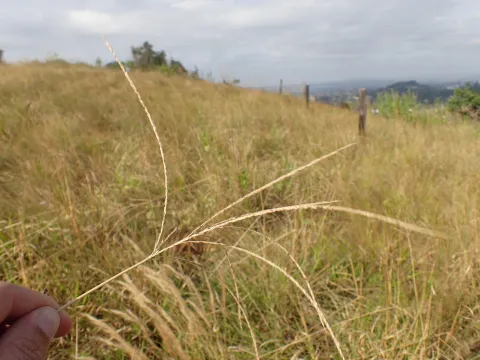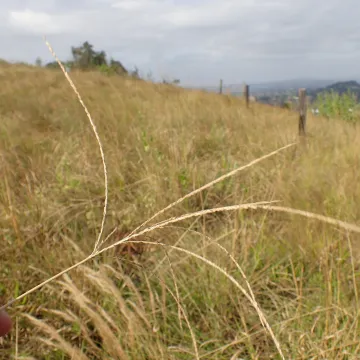
Coast finger grass
Digitaria natalensis Stent
Description
Coast Finger Grass (lat. Digitaria natalensis) is a perennial grass belonging to the Poaceae family. Recognized for its hardiness and nutritional value, it serves as an essential forage plant in livestock-rearing regions, particularly in tropical and subtropical climates where it is used to support sustained grazing operations.
The species originated in Southern Africa, thriving in diverse landscapes from savannas to grasslands. Over time, its cultivation has spread to various regions across the globe with suitable environmental conditions. It is particularly valued in areas where soil stability and forage reliability are critical for agricultural productivity.
Botanically, this grass features a bunch-type growth habit with slender, upright leaf blades. Its inflorescence consists of characteristic finger-like racemes, which give the species its common name. The root system is deep and fibrous, allowing the plant to remain green even during periods of moderate moisture stress.
Regarding cultivation, Coast Finger Grass prefers well-drained soils and thrives under full sun exposure. It is highly adaptable to various soil types but performs best in loamy substrates. Effective management requires periodic fertilization and proper grazing rotation to ensure that the plant maintains its density and vigor throughout the growing season.
In terms of agricultural utility, it is primarily used for grazing and hay production. It is highly palatable to cattle and other ruminants, providing essential nutrients. Farmers should monitor for typical grass pathogens, such as rusts or fungal leaf spots, which may occur during humid seasons, though the plant generally shows good disease resistance.
- Drought tolerant with high regrowth capacity.
- Excellent ground cover for soil erosion prevention.
- High palatability for cattle throughout the season.
- Responds well to nitrogen-based fertilization.
- Suitable for both rotational grazing and hay harvesting.
Photo gallery