Sourgrass
Digitaria insularis (L.) Fedde
Description
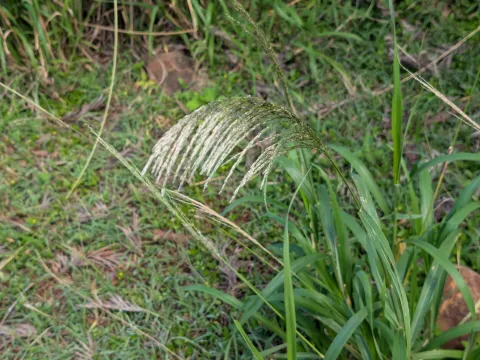
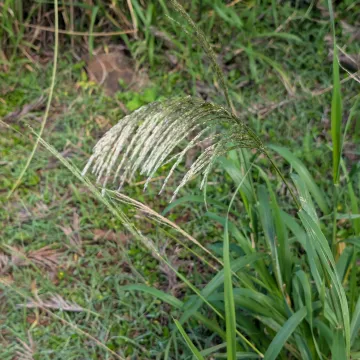
Sourgrass (lat. Digitaria insularis) is a perennial grass species belonging to the Poaceae family. In an agricultural context, this plant is not a crop but is widely recognized as a highly invasive and problematic weed, particularly notorious for its rapid colonization of field crops in tropical and subtropical regions across the globe.
The species originated in the tropical areas of the Americas, but it has since spread significantly across various continents. Its adaptability allows it to establish itself in diverse environments, from disturbed urban areas to large-scale industrial farms. It is particularly aggressive in the cultivation of soy, corn, and cotton, where it acts as a primary competitor for resources.
Botanically, it is a robust perennial that grows in dense clumps, reaching heights of up to 1.5 meters. The leaves are characteristically hairy, which gives the plant a greyish appearance. A critical feature of its biology is the presence of short, thick rhizomes, which allow the plant to recover from mechanical disturbance and make manual or shallow tillage ineffective for complete eradication.
The plant demonstrates extreme resilience to climate and soil conditions, thriving in nutrient-poor soils and showing strong tolerance to drought. Its most significant challenge for modern agriculture is its widespread development of resistance to common herbicides, particularly glyphosate. This has forced farmers to adopt multi-strategy control programs, combining chemical applications with physical, mechanical, and cultural weed management practices.
There is no positive economic use for Digitaria insularis in traditional farming systems. Instead, it poses a significant threat to production capacity:
- Reduces yield by competing for water and nutrients.
- Acts as an alternative host for various pests and plant diseases.
- Increases production costs due to the need for multiple herbicide passes.
- Causes significant damage to agricultural equipment during harvest.
Photo gallery