Southern crabgrass
Digitaria ciliaris (Retz.) Koeler
Description
Southern crabgrass (Digitaria ciliaris) is an annual grass species belonging to the Poaceae family. While it is often managed as a persistent weed in row crop agriculture, in various tropical and subtropical regions, it is valued as an important forage crop due to its rapid biomass production and ability to thrive under high temperatures.
The species originates from tropical areas but has achieved a global distribution due to its high adaptability to different soil types and environmental conditions. It is frequently found in cultivated fields, disturbed areas, and grazing lands where it utilizes its prolific seed production to dominate the local flora during the growing season.
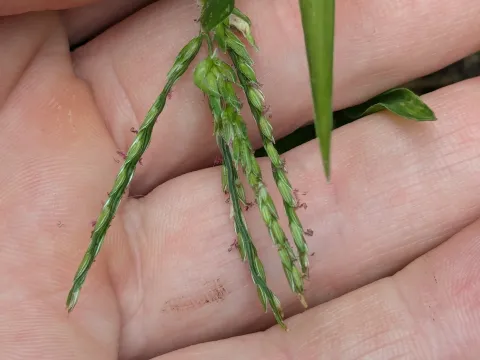
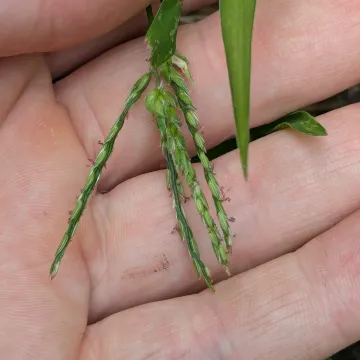
Botanically, it is characterized by its prostrate or ascending stems that tend to root at the lower nodes. The leaf blades are covered with fine, soft hairs, which serve as a diagnostic feature. The inflorescence consists of several racemes arranged in a digitate fashion at the apex of the culm, which is typical for the Digitaria genus.
Cultivation requirements include full sun exposure and warm temperatures, as the plant is highly sensitive to frost. It grows best in well-drained, fertile soils but displays significant drought tolerance once established. Standard agrotechnical practices for forage management involve rotational grazing to maintain the plant in its most nutritious vegetative state before seed head formation.
- High nutritive value during early growth stages.
- Excellent ground cover for erosion control in warm climates.
- Potential for rapid colonisation of disturbed soils.
- Sensitivity to heavy shade and waterlogged conditions.
Regarding health and pests, the plant is susceptible to various fungal pathogens, including rusts and smuts, which can reduce biomass quality. Common insect pests include aphids and leaf-feeding larvae that can cause significant damage in dense stands if not properly monitored throughout the active growing period.
Photo gallery