Papyrus sedge
Cyperus papyrus L.
Description
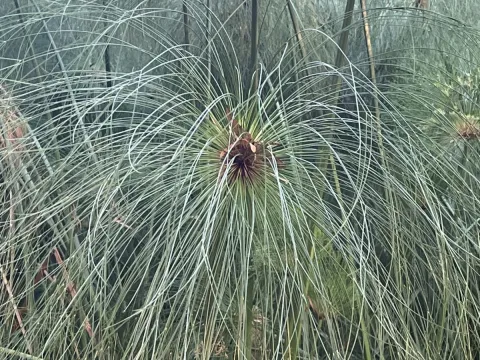
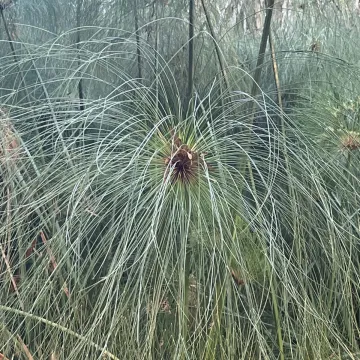
Papyrus sedge (Cyperus papyrus L.) is a tall, aquatic perennial plant belonging to the Sedge family (Cyperaceae). Characterized by its robust, triangular, leafless stems, the plant can reach heights of up to 5 meters. At the top of each stem sits a dense cluster of fine, drooping rays that give the plant its iconic, feathery appearance.
Native to Africa, particularly the Nile Delta and central African wetlands, papyrus has been used by civilizations for millennia. Its natural range includes tropical and subtropical regions where it thrives in standing water or saturated soil. Today, it is cultivated worldwide, not only for its historical significance but also as an ornamental staple for garden ponds and landscape architecture.
Agronomic success with Cyperus papyrus depends heavily on its water requirements. The plant is a true hydrophyte; its rhizomes require constant immersion or extremely high soil moisture levels. It is highly sensitive to cold and thrives only in warm climates with temperatures consistently above 20°C. Sunlight exposure is critical, as partial shade can lead to stunted growth and reduced stem strength.
Cultivation practices focus on maintaining stable water levels and nutrient availability. Propagation is typically achieved through rhizome division during the spring, which ensures rapid establishment. Fertilization should be handled carefully to avoid water pollution, often utilizing controlled-release granules. Growers must monitor for common pests like aphids, mealybugs, and spider mites, which can infest the dense foliage in greenhouse conditions.
The industrial and historical applications of papyrus are vast. While best known as the source of the world’s first paper-like writing material, the plant is also valued for its strong, fibrous stems used in weaving baskets, mats, and traditional watercraft. Modern environmental science also recognizes the plant's capacity for bio-filtration, as it effectively removes excess nitrogen and phosphorus from wetlands and artificial wastewater treatment systems.
- Requires constant saturation to thrive.
- Non-frost-tolerant; requires indoor protection in temperate zones.
- Fast growth cycle in warm, high-light environments.
- Used extensively in constructed wetland treatment systems.
Photo gallery