
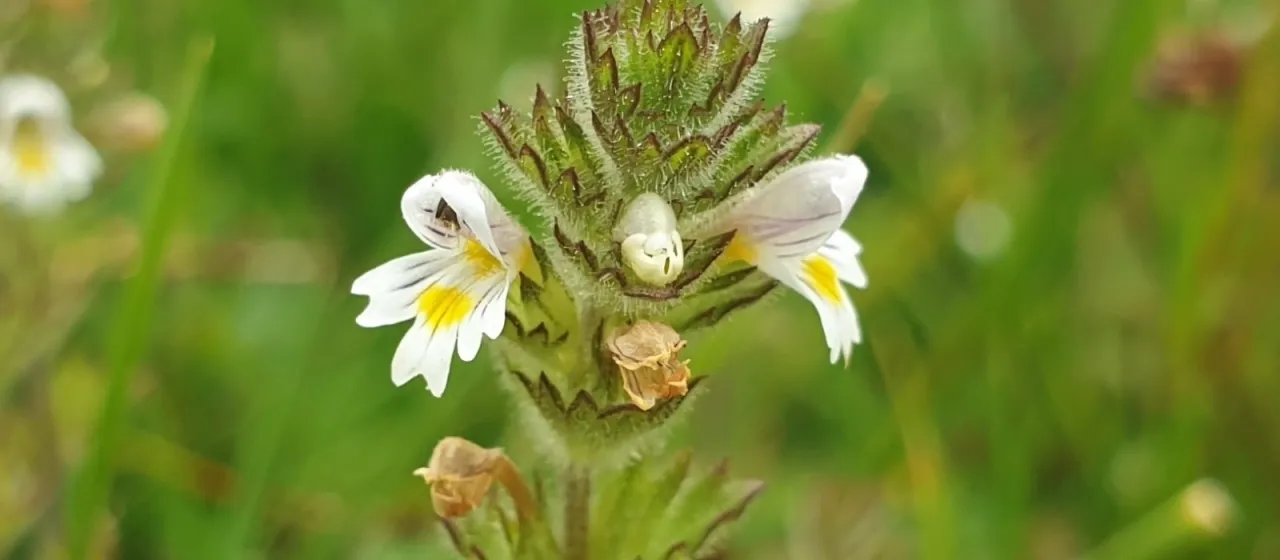
Description
Euphrasia hirtella, commonly known as eyebright, is an annual hemi-parasitic plant belonging to the Orobanchaceae family. Unlike fully autotrophic crops, this plant relies on haustoria to draw nutrients and water from the roots of neighboring vegetation, typically grasses, which is a crucial aspect of its biological survival strategy.
The plant is native to temperate regions across Eurasia. It thrives in diverse habitats including open meadows, pastures, and woodland edges. While it is not typically grown as a conventional agricultural crop, it is harvested as a high-value botanical ingredient for the pharmaceutical and natural health industries.
Botanically, it is defined by its pubescent stems and small, distinctive flowers often featuring yellow or purple markings. The plant typically reaches a modest height, making it well-suited for growth within complex grassland ecosystems where it can coexist with host species without disrupting local biodiversity.
Regarding cultivation and habitat requirements, the plant necessitates stable moisture levels and adequate sunlight. As a hemi-parasite, it cannot be grown in isolation; it requires host grasses to establish a functional root connection. Soil preference is generally towards well-drained loams that maintain a neutral pH balance.
- Traditional use for ocular health and eye irritation.
- Extraction of bioactive compounds for anti-inflammatory supplements.
- Use in homeopathic remedies for seasonal allergies.
- Role in ecological restoration of natural meadow systems.
The plant is susceptible to various fungal pathogens if the environment remains excessively humid during the harvesting season. Pests such as aphids and leafhoppers may also inhabit the plant, though they rarely necessitate industrial-scale pesticide applications due to the plant's opportunistic growth pattern in natural habitats.