
Description
Euphrasia micrantha, commonly known as eyebright, is an annual herb belonging to the Orobanchaceae family. Unlike conventional crops, this plant is a hemiparasite, meaning it derives its water and nutrients by tapping into the roots of surrounding grasses while still performing photosynthesis on its own.
The plant is native to Northern and Western Europe, where it thrives in cool, moist environments. It is typically found in habitats such as heathlands, dry grasslands, and acidic moorlands. Its natural range is limited by the presence of suitable host species that can support its nutritional requirements throughout its life cycle.
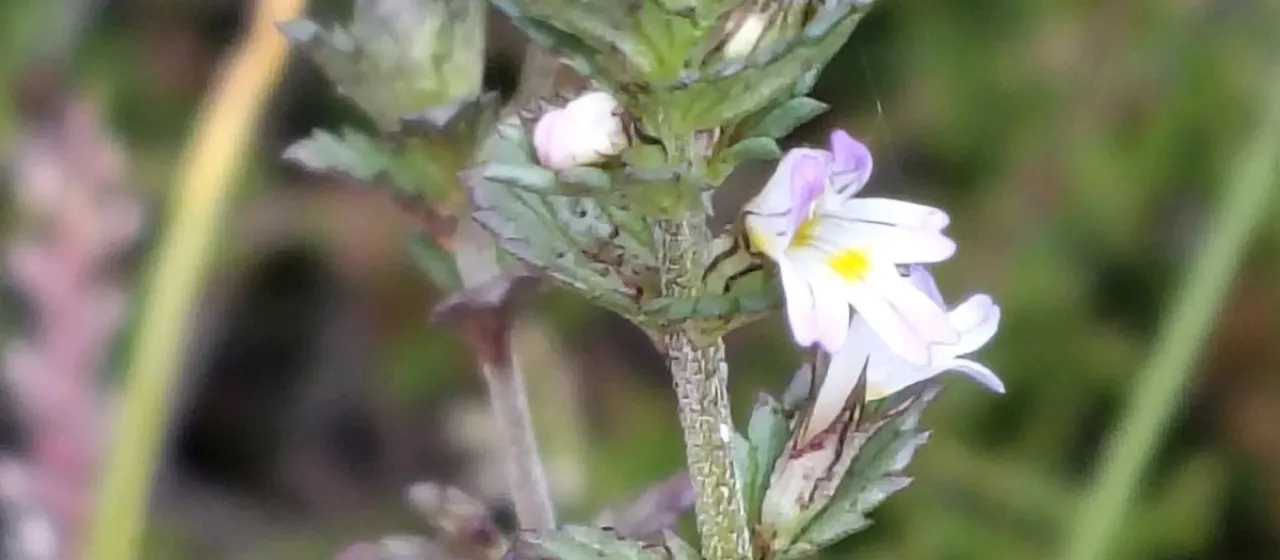
Botanically, the plant features a slim stem with small, serrated leaves and characteristic white or pale purple flowers. These flowers possess a yellow throat, an adaptation that attracts specific pollinators. Its compact morphology is a result of evolutionary adaptation to competitive and nutrient-poor environmental conditions.
Cultivation of Euphrasia micrantha is highly specialized and generally not suitable for conventional large-scale agriculture. Successful growth requires acidic, nutrient-poor soil with excellent drainage and the presence of host grasses. Over-fertilization is detrimental, as it encourages host growth at the expense of the parasite or alters the soil chemistry too drastically.
Industrially and medically, the plant is highly valued for its secondary metabolites, including tannins and glycosides. It is traditionally processed into eye drops and herbal tinctures to treat inflammation and eye strain. Due to its semi-parasitic nature, most commercial supplies are managed via controlled wild harvesting or highly specific experimental plots.
- Hemiparasitic biological characteristics
- Preference for acidic, heath-type soils
- Significant medicinal use in eye care