
Description
Dwarf eyebright (Euphrasia minima) is a small annual herbaceous plant belonging to the Orobanchaceae family. Unlike standard agricultural crops, this plant is classified as a hemiparasite, meaning it is capable of photosynthesis but relies on the roots of host plants, typically various grasses, to supplement its water and mineral supply. This specialized adaptation allows it to thrive in nutrient-poor alpine environments.
The natural range of Euphrasia minima is concentrated in the mountainous regions of Central and Southern Europe, such as the Alps and the Pyrenees. It is typically found in high-altitude meadows, rocky slopes, and pastures. While not cultivated as a mass-market crop, it remains a plant of interest for niche herbal production and botanical research due to its secondary metabolites.
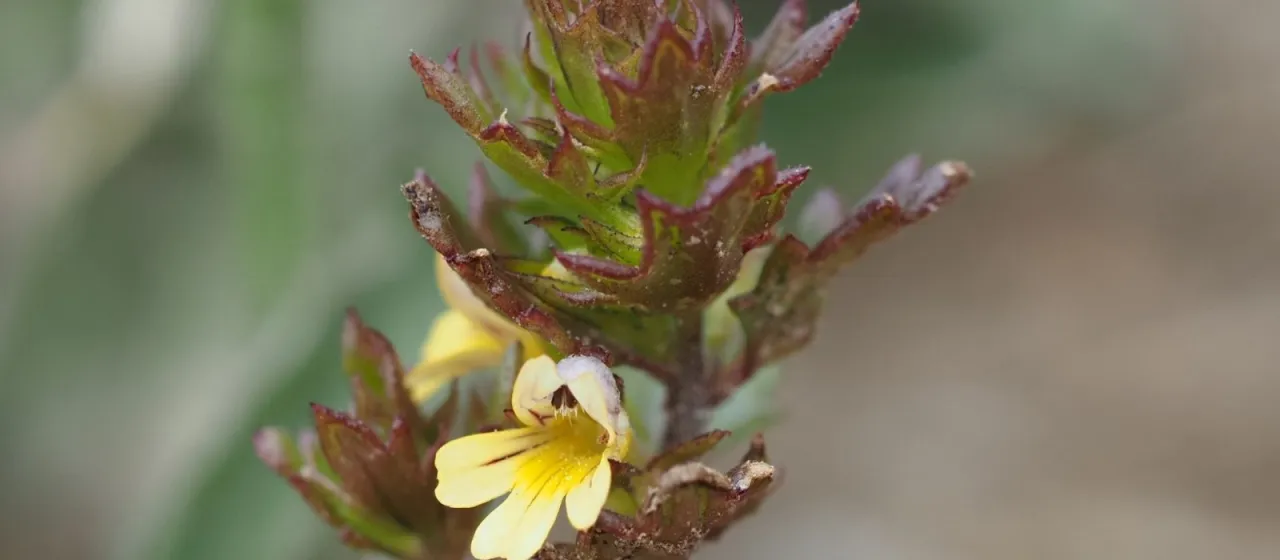
Botanically, the plant is quite small, usually reaching heights of only 5 to 15 centimeters. Its stems are often reddish or purple and covered in fine hairs. The leaves are small and serrated, while the flowers are distinctively shaped with two lips and a yellow spot, making them easy to identify during the flowering season. Its life cycle is short, completing development during the brief alpine summer.
Cultivation requirements are strict due to its specialized ecological niche. The plant requires well-drained, nutrient-poor soil with a neutral to slightly acidic pH. Because it is a hemiparasite, successful growth in a controlled environment is impossible without the presence of appropriate host plants. It requires full sun exposure and cannot tolerate heavy, compacted, or waterlogged soil conditions.
The primary use of the dwarf eyebright is in the field of medicinal herbalism. It contains compounds such as aucubin and various tannins, which are traditionally valued for their anti-inflammatory properties, particularly for ophthalmic conditions. Regarding plant health, the species is susceptible to root diseases if drainage is insufficient and may suffer from infestations by various aphids if growing conditions are sub-optimal.