
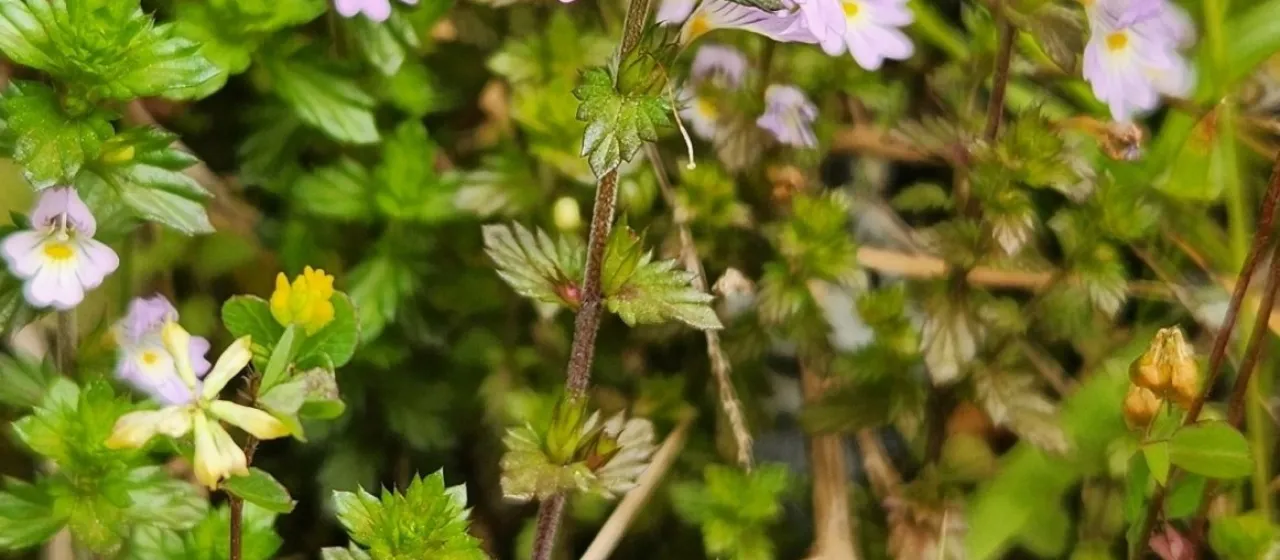
Description
Euphrasia nemorosa, commonly known as a type of eyebright, is an annual herbaceous plant belonging to the Orobanchaceae family. It is distinct for its hemiparasitic nature, meaning it gains some of its nutrients by attaching its roots to the roots of neighboring grasses and other herbaceous plants through specialized structures called haustoria.
The natural range of this species extends across much of Europe and parts of Western Asia. It typically thrives in open, semi-shaded environments such as pastures, meadow margins, and forest clearings. While not a commercial staple crop, it is intentionally cultivated in organic farming settings to supply the growing demand for natural herbal remedies.
Botanically, Euphrasia nemorosa is characterized by its erect, branching stem, usually growing 10 to 30 cm in height. The leaves are opposite and have distinct serrated edges. The flowers, which appear during the summer months, are notable for their white or pale violet color, often marked with a yellow spot on the lower lip, serving as a nectar guide for pollinators.
Cultivation requires specific environmental conditions. It is essential to maintain soil moisture without allowing waterlogging. The presence of suitable host plants is critical for the survival of the crop; therefore, it is often sown alongside companion grasses. It prefers neutral to slightly acidic soils and does not tolerate high levels of synthetic fertilizers, which can disrupt the delicate parasitic balance.
The primary economic value of this plant lies in its medicinal properties, particularly in treating ocular conditions. Extracts from the plant are rich in iridoid glycosides and tannins, which provide anti-inflammatory and astringent effects. The plant is relatively hardy and rarely suffers from severe pest infestations, though growers should be vigilant for signs of powdery mildew in overly dense or poorly ventilated plots.