
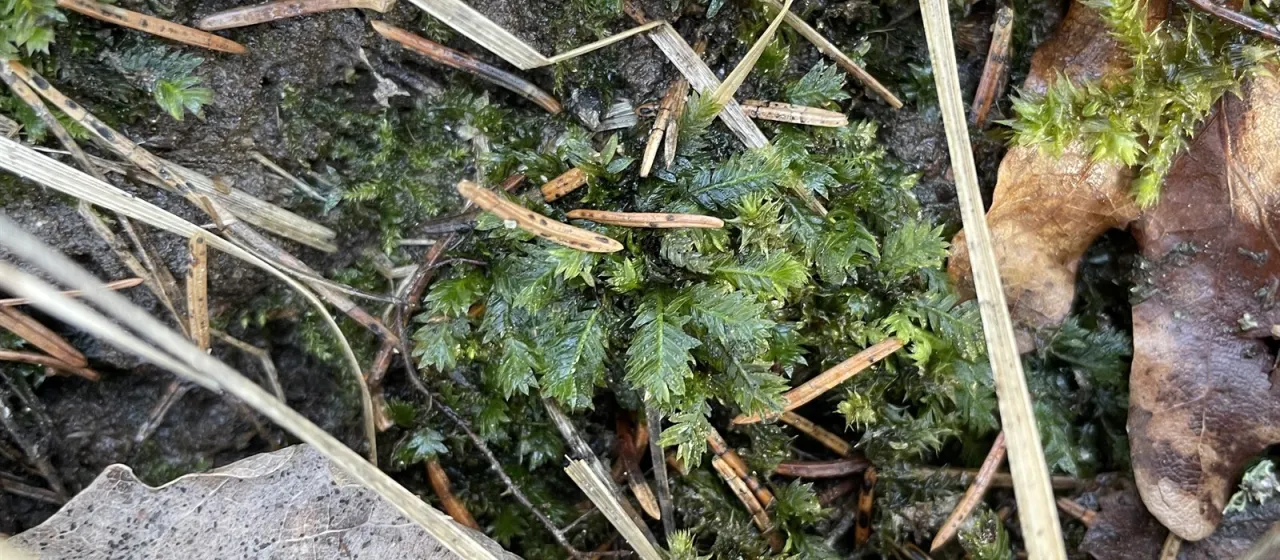
Description
Fissidens osmundoides is a perennial moss belonging to the Fissidentaceae family. It is distinct for its fern-like appearance, characterized by leaves arranged in two rows along the stem, which overlap in a way that mimics the fronds of the Osmunda fern genus, hence its specific epithet.
The native distribution of this species covers a wide range across the Northern Hemisphere, including temperate and boreal regions of Europe, Asia, and North America. It thrives primarily in humid environments, often colonizing damp rocks, stream banks, and acidic substrates in forested areas where moisture levels remain consistently high throughout the year.
Botanically, the species is defined by its oblong-lanceolate leaves and a well-developed midrib. The cells of the leaf are typically papillose, a structural feature that assists the plant in moisture retention. These mosses form dense, compact turfs that can thrive in shaded microhabitats, displaying various shades of green to deep olive depending on the intensity of the light available.
Cultivation practices for this species focus on replicating its natural hygrophytic environment. While not a conventional agricultural crop, it is highly valued in aquascaping and vivarium management. Successful growth requires a stable, humid atmosphere and avoiding direct solar radiation, which can lead to rapid desiccation or the scorching of the delicate photosynthetic tissues.
- Soil/Substrate pH: Slightly acidic (5.5–6.5).
- Temperature range: 15–22°C (avoid high heat).
- Light intensity: Low to moderate filtered light.
- Humidity: High (70% or greater).
The primary use of this moss is in the horticultural sector, specifically for creating naturalistic terrarium displays and underwater scapes. Pathogens are generally rare unless the plant is subjected to poor air circulation or waterlogged conditions, which promote fungal infections and decay. Proper monitoring of humidity and cleanliness of the growth substrate is essential for long-term health.