
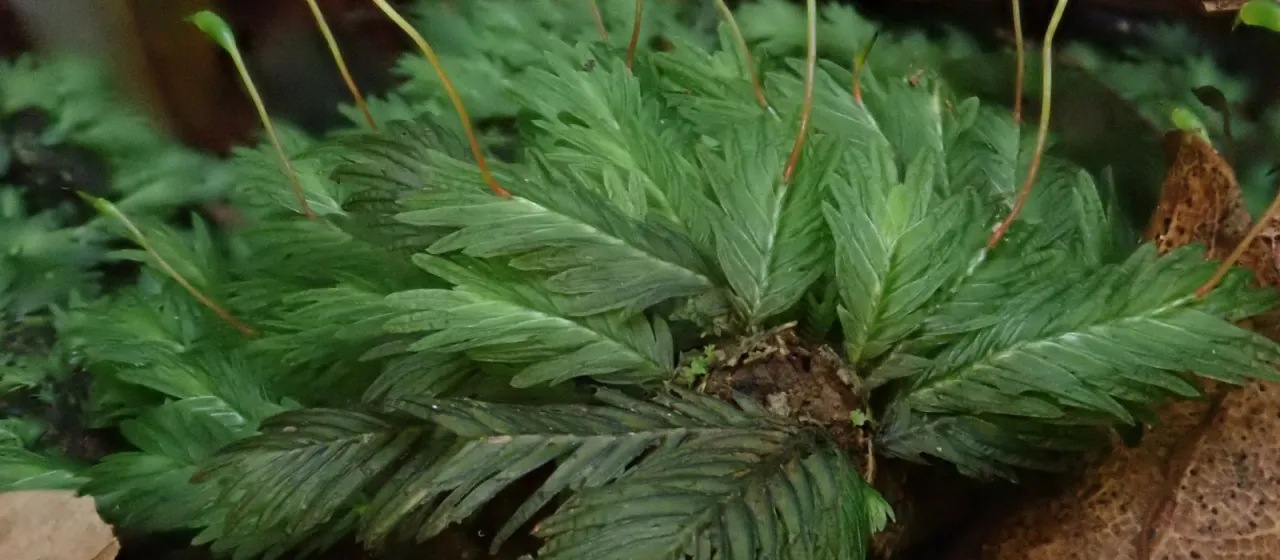
Description
Fissidens serrulatus is a perennial moss species belonging to the Fissidentaceae family. While not a conventional agricultural crop, it is a specialized botanical subject widely recognized in horticulture, particularly within the fields of aquascaping, terrarium maintenance, and botanical research.
The natural range of this species extends across humid temperate and subtropical regions, including parts of Europe and Macaronesia. It thrives in shaded, moisture-rich environments, typically inhabiting damp rocks, riverbanks, and humus-rich forest soils where humidity remains consistently high throughout the year.
Botanically, the plant is characterized by its distichous leaves that display a finely serrated margin, from which the species name originates. It grows in dense, low-profile tufts of a deep green hue. Reproduction occurs primarily through spores housed in sporophytes, though vegetative propagation via fragmentation is the primary method of spread in favorable conditions.
Regarding cultivation requirements, Fissidens serrulatus demands precise environmental controls. It is highly sensitive to desiccation and direct solar radiation. Successful growth in artificial settings requires high atmospheric humidity, soft or moderately hard water, and a substrate that provides firm anchorage, such as volcanic rock or organic driftwood, maintained at a neutral pH.
The primary utility of this moss lies in its ornamental value for high-end aquatic and terrestrial vivariums. As a slow-growing species, it is highly valued for creating intricate natural landscapes. Typical pests or health issues include fungal outbreaks caused by stagnant air and competitive pressure from invasive algae, which can rapidly overwhelm the delicate moss colonies if water parameters are not managed correctly.