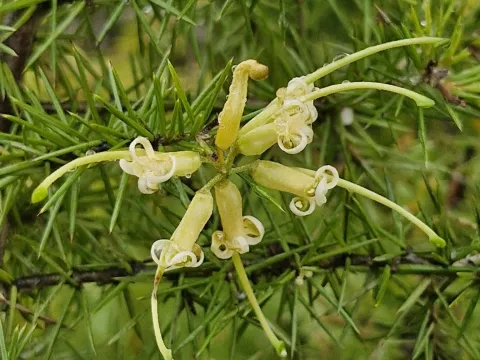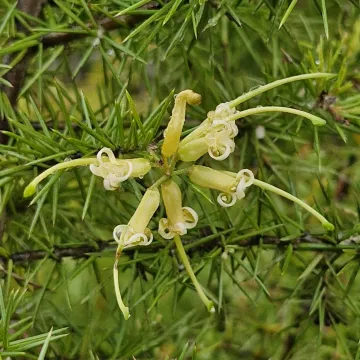
Grevillea juniperina
Grevillea juniperina R. Br. x Grevillea lanigera A. Cunn. ex R. Br.
Description
Grevillea juniperina, commonly known as the juniper-leaf grevillea, is a significant ornamental shrub belonging to the Proteaceae family. As a hybrid derived from Grevillea juniperina and Grevillea lanigera, it exhibits a distinct, dense growth habit and profuse flowering, making it a highly valued specimen in horticultural circles globally.
Originating from the eastern regions of Australia, this plant has adapted to diverse climatic conditions, ranging from open woodlands to shrubby heathlands. Its natural range has spurred its popularity in temperate climates worldwide. Today, it is extensively grown in Mediterranean-type climates, where it thrives in gardens that mimic its native soil and temperature profiles.
The botanical identity of this plant is defined by its needle-like, rigid foliage that provides a textured appearance throughout the year. The flowers are typically arranged in showy terminal clusters that resemble spider-like brushes. These blooms vary in color, appearing in vibrant shades of red, pink, apricot, and pale yellow, often attracting a variety of nectar-feeding birds.
Regarding cultivation requirements, the species demands extremely well-draining, slightly acidic soil. It is notoriously sensitive to phosphorus, necessitating the use of specialized, low-phosphorus fertilizers designed for Proteaceae. The plant thrives in full sun exposure but appreciates protection from drying, harsh winds. Proper irrigation is crucial, as the root system is susceptible to fungal rot if waterlogged.
In landscaping, this cultivar is highly prized for its versatility as a ground cover, hedge, or standalone feature plant. Its ability to tolerate light pruning allows gardeners to maintain a desired shape and density. While generally robust, growers should remain vigilant against common pests such as mealybugs and scale, and manage soil moisture carefully to prevent root-zone diseases.
Photo gallery