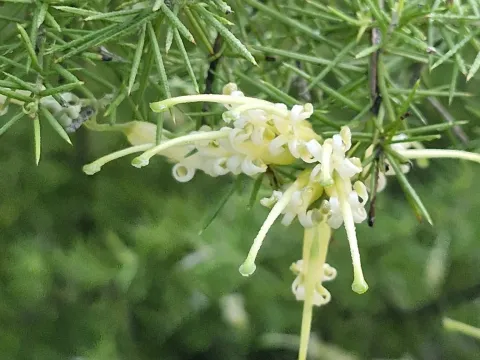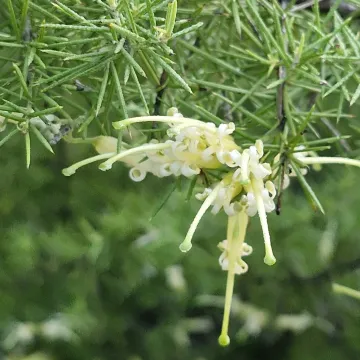
Juniper-leaf grevillea
Grevillea juniperina x Grevillea rhyolitica
Description
The Juniper-leaf grevillea (Grevillea juniperina) is a prominent member of the Proteaceae family. Often hybridized with species like Grevillea rhyolitica, it is prized in horticulture for its dense, needle-like foliage and vibrant, spider-like inflorescences. As a hardy evergreen shrub, it serves as a staple in xeriscaping and sustainable garden design.
Native to southeastern Australia, this plant is naturally adapted to rocky and well-drained habitats. Its evolutionary history in nutrient-poor soils has made it exceptionally resilient to drought once established. In cultivation, it thrives in regions with Mediterranean-type climates, where it contributes to biodiversity by attracting nectar-feeding birds.
Botanically, the plant grows as a multi-stemmed shrub. Its most distinct features are its stiff, pungent leaves that resemble juniper needles, providing excellent texture in garden borders. The flowers range from creamy yellow to deep pink and red, appearing as curved, brush-like clusters. The plant typically reaches a height of 1 to 3 meters, depending on the cultivar.
Cultivation requires strict attention to soil structure; it must be exceptionally well-drained. The species is highly sensitive to phosphorus, necessitating the use of specialized low-phosphorus fertilizers. It performs best in full sun, which promotes denser growth and prolific flowering. Regular pruning after the flowering cycle helps maintain a compact, bushy habit.
The primary use of this culture is ornamental, favored for its year-round green presence and striking seasonal blooms. It is also used for erosion control on slopes. Regarding plant health, the main threats are root pathogens like Phytophthora, caused by waterlogged soil conditions, and occasional infestations of mealybugs in glasshouse environments.
- Light: Full sun to light shade.
- Watering: Deep, infrequent watering; allow soil to dry out.
- Soil: Sandy, slightly acidic, and low in nutrients.
- Maintenance: Prune lightly to prevent "legginess".
Photo gallery