Grevillea
Grevillea juniperina x grevillea victoriae
Description
Grevillea is a large genus of evergreen shrubs and trees belonging to the Proteaceae family. The hybrid between Grevillea juniperina and Grevillea victoriae is a highly sought-after ornamental plant known for its needle-like foliage and vibrant, unique inflorescences. This agricultural crop serves primarily as a key element in decorative landscaping and botanical collections.
Native to the Australian continent, these plants are adapted to a wide range of habitats, from open woodlands to rocky outcrops. The cultivation range has expanded globally, particularly in Mediterranean-type climates that mimic the plant's natural environment. Understanding these origins is essential for successful growth outside of its primary native habitat.
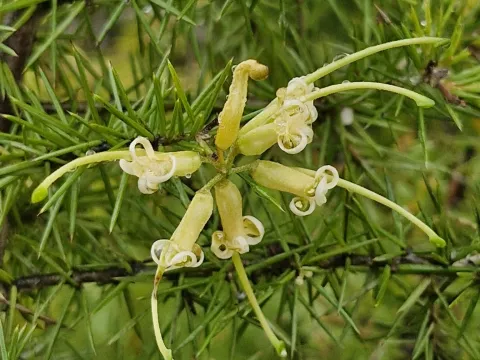
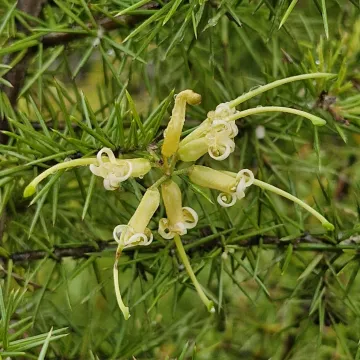
Botanically, this hybrid exhibits a dense, bushy growth habit. The leaves are typically sclerophyllous (hard and leathery), providing drought resistance. The flowers, which are the main attraction, possess a distinct structure consisting of long, colorful styles that emerge from the floral base. This structural complexity is a hallmark of the family and requires specific environmental conditions for optimal bloom development.
The agrotechnology for this species emphasizes the importance of excellent drainage. Grevilleas thrive in acidic, nutrient-poor soils and are notoriously sensitive to excessive phosphorus, which can be toxic to their root systems. Adequate sun exposure is mandatory for healthy development; shaded conditions often lead to sparse foliage and a significant reduction in flower production.
In practice, the plant is used for hedge planting, erosion control on slopes, and ornamental focal points in gardens. When it comes to plant health, protection against root pathogens is the primary management priority. Common pests like mealybugs and spider mites may also appear in suboptimal conditions, requiring careful monitoring and integrated pest management strategies.
Photo gallery