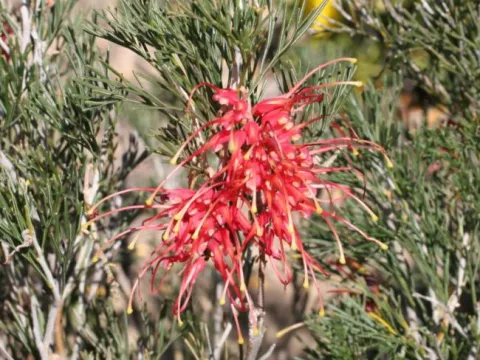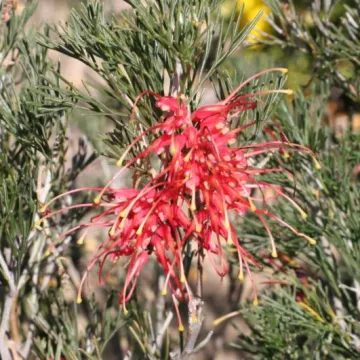
Grevillea obtusifolia
Grevillea obtusifolia Meisn.
Description
Grevillea obtusifolia is a resilient evergreen shrub belonging to the Proteaceae family. Renowned for its dense, spreading growth habit, this species is highly valued in horticulture as a ground-covering plant capable of stabilizing soil and providing aesthetic appeal in xeriscaping projects.
Native to the southwestern regions of Western Australia, this plant thrives in environments characterized by sandy, nutrient-poor soils and seasonal dryness. Its natural habitat dictates its physiological needs, making it particularly well-suited for gardens in Mediterranean climates where irrigation is controlled and sunlight is abundant.
The botanical structure of Grevillea obtusifolia includes distinctive, tough, elliptical leaves with rounded tips. The plant is engineered to conserve moisture, featuring leathery leaf surfaces that minimize transpiration. During the flowering stage, it produces intricate inflorescences that serve as a natural magnet for various pollinators, including nectar-feeding birds.
Cultivation requires strict adherence to specific agricultural practices, primarily focused on soil composition. Like many Proteaceae, this plant has specialized proteoid roots that are highly sensitive to phosphorus. Consequently, using standard high-phosphorus fertilizers can lead to toxicity, often resulting in the decline of the plant. Excellent drainage is non-negotiable to avoid root rot.
- Ensure soil is sandy and free-draining.
- Avoid fertilizers containing phosphorus.
- Provide maximum exposure to sunlight.
- Limit pruning to light shaping after the flowering season.
The main pathological concerns involve fungal infections such as Phytophthora, which typically develop in waterlogged soil conditions. Pest management is usually straightforward, focusing on monitoring for scale insects or spider mites, which can be managed through natural biological controls or targeted, eco-friendly systemic treatments.
Photo gallery