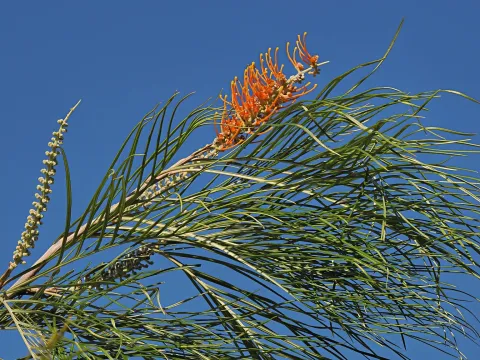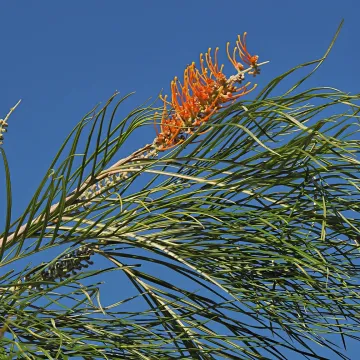
Fern-leaved grevillea
Grevillea pteridifolia Knight
Description
Fern-leaved grevillea (Grevillea pteridifolia Knight) is a distinctive evergreen species belonging to the Proteaceae family. In its native habitat, it grows as a large shrub or a small, graceful tree, often reaching heights of several meters. It is widely recognized for its fern-like foliage, which provides a striking textural element in any garden setting.
Originating from Northern Australia, this species is well-adapted to tropical and subtropical environments. It thrives in regions characterized by high temperatures and significant sunlight. Due to its natural adaptation to Australian soils, it performs best in regions where environmental conditions mimic its native range, specifically regarding heat tolerance and seasonal rainfall patterns.
Botanically, the plant is distinguished by its vibrant, brush-like golden or orange flowers that appear throughout the year. The foliage is deeply lobed and covered with fine, silver hairs, an adaptation that reduces water loss. The root system is specialized, featuring proteoid roots that allow the plant to efficiently absorb nutrients from nutrient-poor, sandy soils.
Cultivation practices require specific attention to detail:
- Planting in well-drained, sandy, or slightly acidic soils is critical.
- Exposure to full sunlight is essential for optimal flower production.
- Avoidance of high-phosphorus fertilizers, which can be toxic to many species in the Proteaceae family.
- Minimal pruning, focusing only on the removal of damaged or diseased wood.
The economic and practical utility of this species is primarily focused on landscape architecture and habitat restoration. Its capacity to support nectar-feeding birds and insects makes it a valuable asset for biodiversity. Furthermore, it is increasingly used in xeriscaping projects where water conservation is a priority, given its inherent resilience to dry conditions once established.
Common health issues often stem from poor drainage, leading to root rot, which is a major threat in heavy, clay-based soils. Pests such as aphids and scale insects may occasionally infest the plant, requiring targeted intervention. Regular monitoring and maintaining proper spacing to ensure good air circulation are the best defense strategies for a healthy plantation.
Photo gallery