Grevillea thyrsoides
Grevillea thyrsoides Meisn.
Description
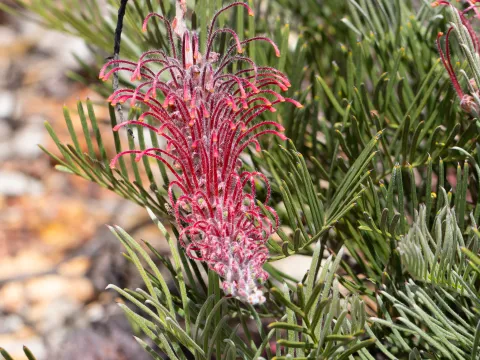
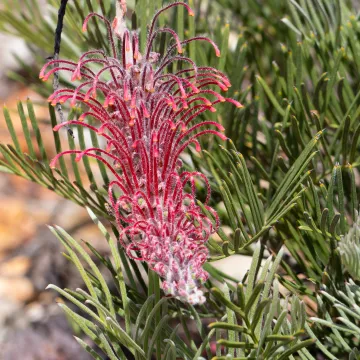
Grevillea thyrsoides is a perennial woody shrub belonging to the Proteaceae family. Recognized for its distinctive, thyrsoid inflorescences, this species is a noteworthy member of the Australian native flora. It is highly valued by botanists and collectors for its unique morphological structure and its ability to thrive in harsh environments.
The plant originates from the southwestern regions of Australia. Its natural habitat includes sandy and gravelly soils where environmental conditions are characterized by seasonal drought. The species has evolved specific survival mechanisms to cope with nutrient-poor soils and limited water availability, defining its role in the local ecosystem.
Botanically, it is characterized by rigid foliage and a deep root system designed to access water in arid soils. The plant structure is typically dense, making it an excellent candidate for structural planting. Its flowers are highly specialized, often adapting to attract local avian pollinators, which play a crucial role in its natural reproduction process.
Cultivation requirements necessitate well-drained, acidic to neutral soil and full sun exposure. It is crucial to avoid fertilizers high in phosphorus, as many members of the Proteaceae family possess specialized root structures that can be harmed by high nutrient levels. Proper site selection is vital, ensuring the plant is protected from stagnant water, which is the primary cause of root failure.
The plant is primarily used in xeriscaping and sustainable landscape design. While relatively hardy, it can be susceptible to root rot in poor drainage conditions and may be affected by scale insects or spider mites if kept in poorly ventilated areas. Regular monitoring and maintaining appropriate soil moisture are the best ways to ensure long-term health in an ornamental setting.
Photo gallery