Grevillea victoriae
Grevillea victoriae
Description
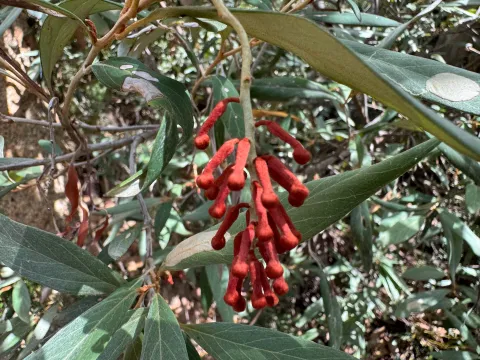
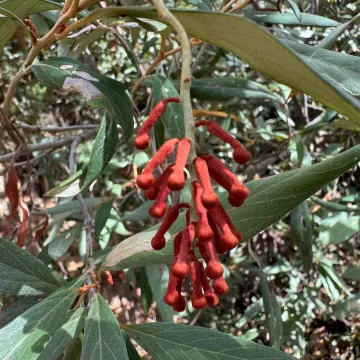
Grevillea victoriae, commonly known as the Royal Grevillea, is an evergreen shrub belonging to the Proteaceae family. Renowned for its distinctive, pendulous clusters of reddish-brown flowers and attractive grey-green foliage, it serves as an iconic ornamental plant in gardens and public landscapes across regions with temperate climates.
Native to the alpine and sub-alpine regions of southeastern Australia, specifically the states of Victoria and New South Wales, this species is highly adapted to cooler mountainous environments. Its natural habitat allows it to be one of the most frost-tolerant species within the genus, making it a robust choice for temperate climate landscaping where other Australian natives might fail.
Botanically, Grevillea victoriae typically grows as a dense, spreading shrub reaching heights of 2 to 4 meters. The leaves are elliptical, leathery, and often feature a metallic or silvery-grey underside. The inflorescences are characteristically one-sided racemes that hang down, filled with tubular flowers that are highly attractive to nectar-feeding birds and pollinating insects.
The cultivation of this species requires meticulous attention to soil conditions. It demands exceptional drainage and prefers acidic, low-phosphorus soils. Growers must avoid standard high-phosphorus fertilizers, as the roots are sensitive and may suffer from phosphate toxicity. It performs best in full sun but can tolerate light shade, provided the site is well-ventilated and protected from strong, drying winds.
In terms of usage, the Royal Grevillea is prized for its year-round foliage and striking bloom period. It is frequently employed in hedging, screen planting, or as a feature shrub in native gardens. Common issues include fungal root rots, such as Phytophthora, which usually result from waterlogging, and occasional infestations by scale insects, which can be managed through pruning and environmental control.
- Requires well-draining, acidic soil
- Sensitive to high-phosphorus fertilizers
- Optimal in full sun to partial shade
- Prune annually to maintain density
Photo gallery