
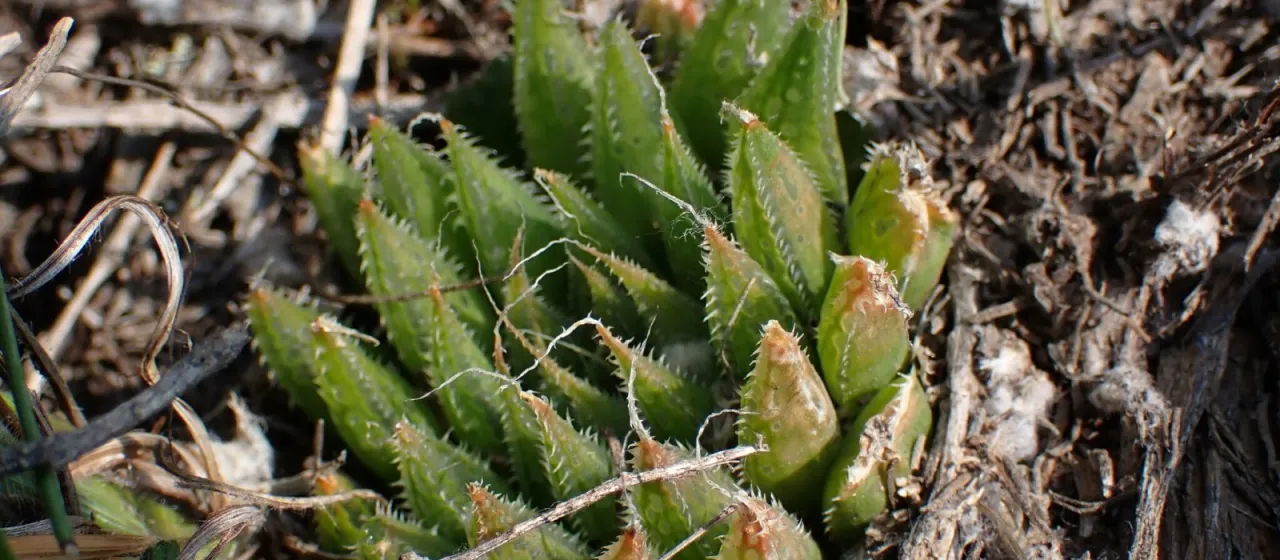
Description
Haworthia nortieri is a perennial succulent species belonging to the Asphodelaceae family. This plant is well-regarded by botanists and collectors for its compact, rosette-forming growth habit and specialized leaves that act as water storage organs, allowing the plant to withstand extended periods of drought in its native environment.
The species originates from the semi-arid regions of South Africa. It typically occupies rocky habitats where it finds protection from extreme sun exposure among stones or under sparse vegetation. This unique evolutionary adaptation allows it to flourish in environments where moisture is limited and soil conditions are characteristically poor in organic matter.
Botanically, Haworthia nortieri is characterized by its distinctively shaped leaves, which may feature small tubercles or translucent windows. The root system is relatively shallow, designed to absorb episodic rainfall efficiently. During the reproductive phase, the plant produces elongated inflorescences bearing small, tubular flowers that are typical for the genus.
Effective cultivation requires strict adherence to specific agricultural practices to mimic the plant's natural habitat:
- Substrate: Requires a highly porous, well-draining mineral mix, such as a combination of pumice, perlite, and coarse sand.
- Irrigation: Follow a cycle of soaking and drying, ensuring the substrate is completely dry before the next watering session.
- Light: Prefers bright, indirect light; harsh direct sun can cause the leaves to turn reddish-brown or suffer from physiological stress.
- Climate: Thrives in temperatures between 15°C and 25°C, with a requirement for a cooler, drier dormancy period during winter months.
The economic value of this crop is primarily found in the ornamental plant trade and horticultural research. While generally resilient, the plant is susceptible to root rot if maintained in overly humid or poorly drained conditions. Common pests include mealybugs and spider mites, which can be managed through good hygiene and targeted biological or chemical control measures.