
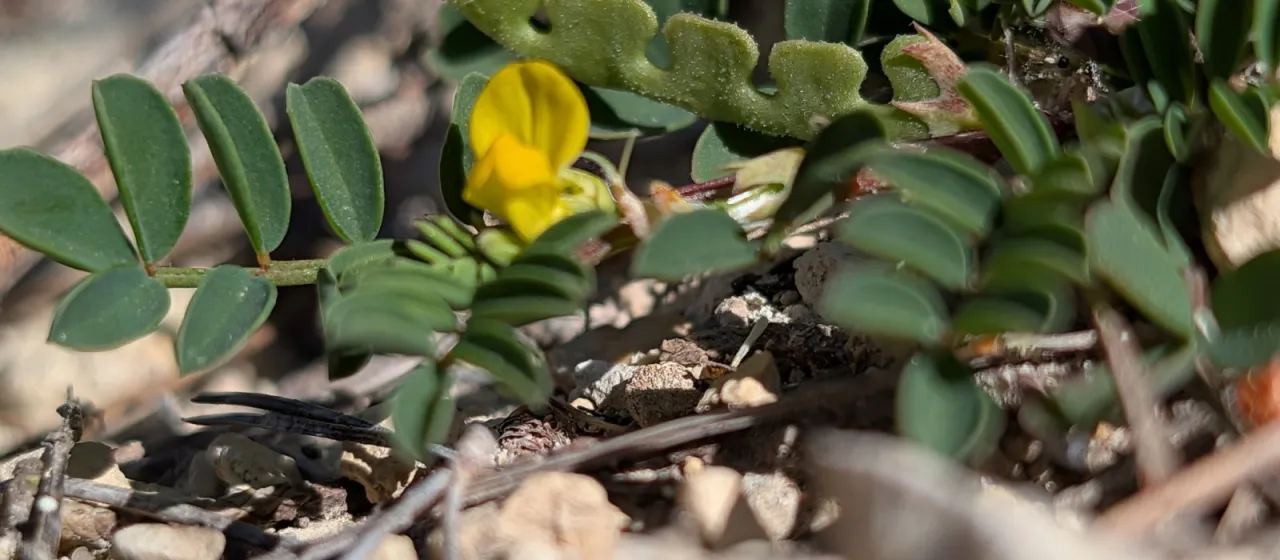
Description
Two-flowered horseshoe vetch (Latin: Hippocrepis biflora) is an annual herbaceous plant belonging to the Fabaceae family. It is recognized for its unique fruit structure, where pods consist of horseshoe-shaped segments, a distinctive feature that differentiates it from other common forage legumes found in similar ecosystems.
The native distribution of this species is centered around the Mediterranean Basin and parts of Southern Europe. It thrives in arid to semi-arid regions, commonly inhabiting rocky slopes and well-drained meadows. In agricultural terms, it is regarded as an resilient species capable of surviving in marginal lands where soil moisture is limited.
Botanically, the plant features pinnate leaves and small, vibrant yellow flowers arranged in clusters. It develops a deep taproot system, which serves as a vital adaptation for water absorption during summer droughts. Following the reproductive phase, the plant produces characteristic curved pods containing seeds that contribute to the regeneration of the population.
To ensure successful cultivation, farmers should select well-drained, lime-rich soils. The crop is highly photophilous and requires substantial sunlight exposure to reach full maturity. Standard agrotechnical practices include light soil cultivation and strategic timing of seeding to avoid late frosts, as the plant prefers stable, warm temperatures for early development.
Economically, Hippocrepis biflora is primarily utilized as high-protein forage for livestock, particularly sheep and goats. Its nutritional value is comparable to other wild legumes, and it aids in soil fertility improvement through nitrogen fixation. Growers should monitor for common legume pests, such as aphids and weevils, and ensure proper drainage to prevent fungal root diseases.