
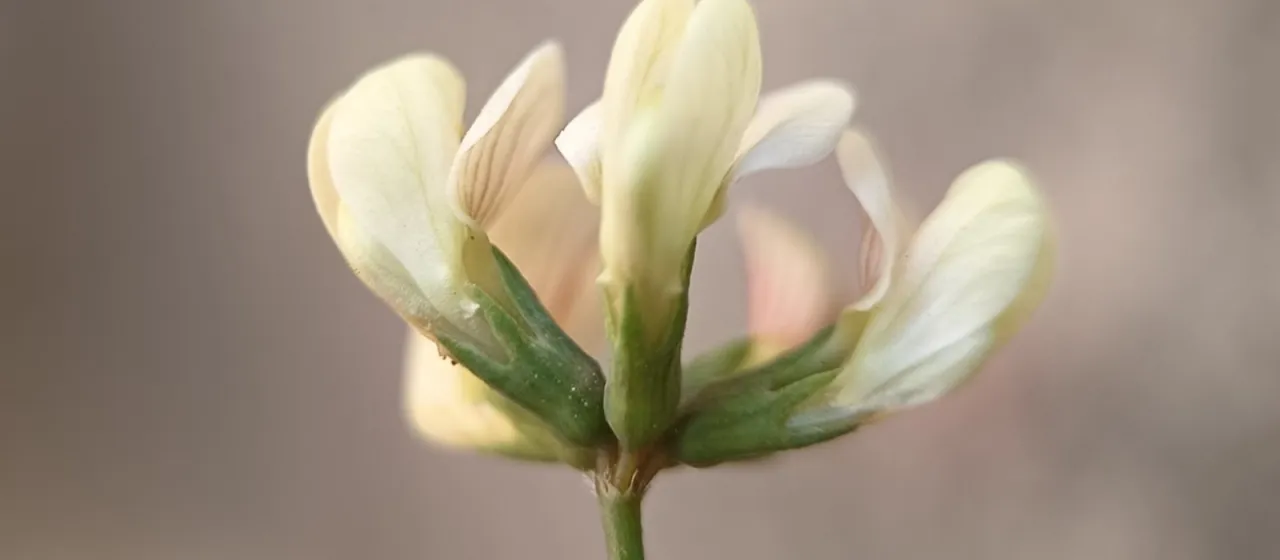
Description
Constricted horseshoe vetch (Hippocrepis constricta) is an annual herbaceous plant belonging to the Fabaceae family. It is a resilient species recognized for its adaptation to harsh, arid environments, where it plays a notable role in local biodiversity and livestock foraging systems.
The origin of this species is linked to the Mediterranean Basin, Northern Africa, and the Middle East. It is widely distributed across regions characterized by long, dry summers and poor soil conditions, showcasing the plant's evolutionary ability to thrive in challenging semi-desert ecosystems.
Botanically, the plant is identified by its pinnate leaves and distinctive fruits. The legumes are constricted between the seeds, forming a shape that resembles a series of horseshoes, which provides the genus with its scientific name. These structures are adapted to withstand desiccation while protecting the seeds inside.
For successful cultivation, Hippocrepis constricta requires significant solar exposure and well-drained, porous soils. It is highly resistant to drought stress, though it thrives best in environments where soil moisture levels are managed during the initial growth stages. It generally requires minimal inputs, as it is well-suited to low-fertility soils.
The primary economic use of this culture involves forage production for extensive grazing. Furthermore, its ability to fix atmospheric nitrogen makes it an excellent candidate for ecological restoration projects and sustainable soil management in arid regions. It helps in preventing soil erosion and improving soil fertility for subsequent vegetation.
- High drought tolerance
- Nitrogen-fixing capability
- Adaptability to poor rocky soils
- Sustainable forage resource