
Description
Horseshoe vetch (Hippocrepis multisiliquosa) is an annual herbaceous legume belonging to the Fabaceae family. As an agricultural crop, it is recognized for its exceptional resilience in semi-arid environments, making it a valuable candidate for drought-prone farming regions where biomass production is often limited by water scarcity.
Originating from the Mediterranean basin and parts of North Africa, this species is well-adapted to Mediterranean-type climates. It occupies niche environments such as dry grasslands and stony slopes, demonstrating an evolutionary advantage in nutrient-poor and alkaline soils. Its ability to fix nitrogen makes it an excellent candidate for crop rotation systems.
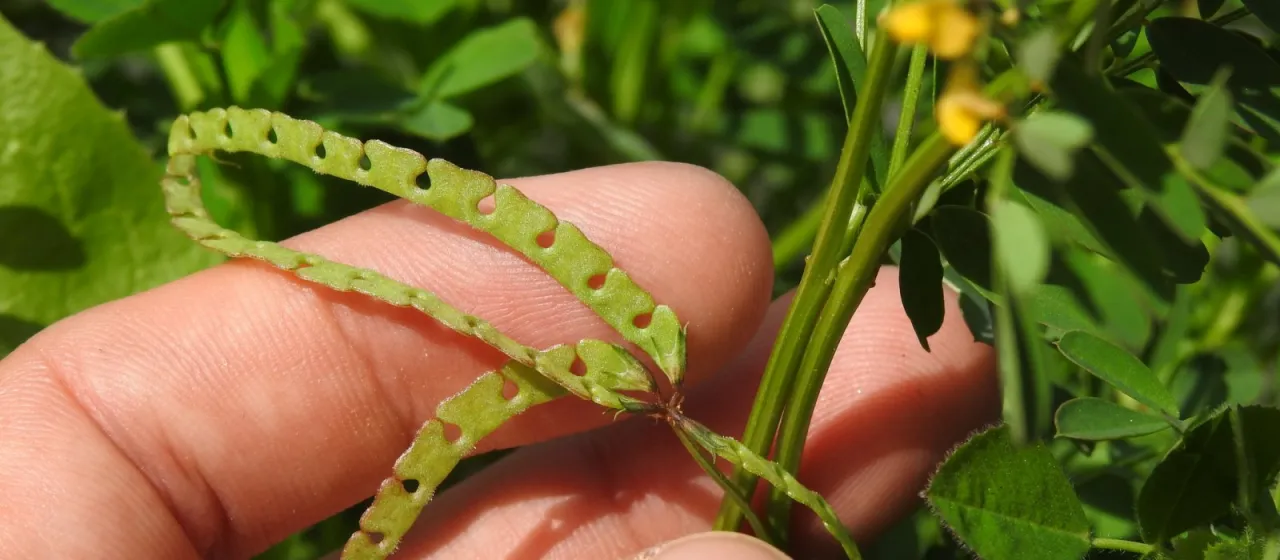
Botanically, the plant is distinguished by its unique, horseshoe-shaped pod segments, which lend the genus its name. It features pinnate leaves and small yellow flowers arranged in umbels. The root system is deep and efficient, allowing the plant to reach moisture reserves in the subsoil that are inaccessible to shallower-rooted grasses.
Agricultural management requires choosing well-drained, sunny locations with a neutral or alkaline soil pH. While the plant is hardy once established, it requires careful weed control during the seedling stage, as it can be outcompeted by aggressive weeds. It is typically sown in early spring to take advantage of seasonal moisture for initial development.
The primary agricultural use of this crop is as a forage plant for livestock, providing high-quality grazing material. Additionally, it is used in sustainable agriculture as a cover crop or green manure to improve soil physical properties. Like many legumes, it is susceptible to root rots in waterlogged conditions and may attract common legume-feeding pests such as aphids or weevils if not monitored correctly.