Jezo spruce
Picea jezoensis (Siebold & Zucc.) Carrière
Description
Jezo spruce (Picea jezoensis) is an evergreen coniferous tree species belonging to the Pinaceae family. It is a vital forest-forming species known for its remarkable adaptation to the cool, humid climates characteristic of its natural habitat in Eastern Asia.
The native range of this species extends across the Russian Far East, Japan, the Korean Peninsula, and Northern China. It typically thrives in mountainous regions, often forming dense, stable forests at various elevations where it can access sufficient soil and atmospheric moisture.
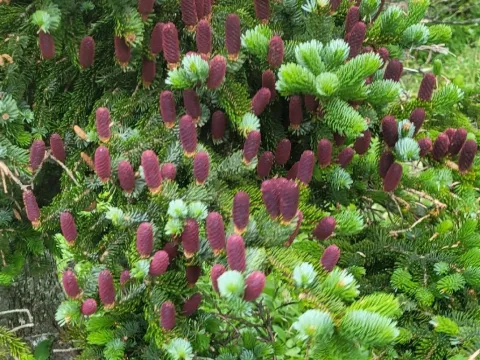
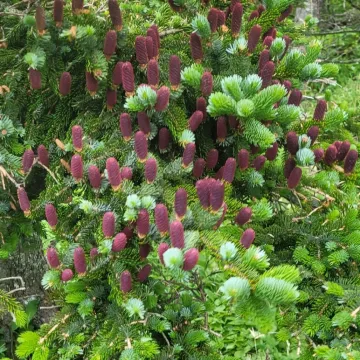
Botanically, the species is distinguished by its narrow, conical crown and unique foliage. The needles are dark green on the upper surface and possess two prominent white stomatal bands on the underside, which creates a striking silver-like appearance when moved by the wind. Its root system is shallow, reflecting its adaptation to mountain soils where nutrients are often concentrated in upper layers.
Agricultural requirements for the species emphasize the need for cool, moist, and well-drained growing conditions. It is sensitive to prolonged drought and prefers slightly acidic, loamy, or sandy-loam soils. When cultivated, spacing is critical to ensure proper air circulation and to minimize the risk of humidity-related fungal diseases.
Economic and practical uses include extensive use in the timber industry for cellulose and construction materials due to its straight-grained wood. It also serves as a significant ornamental plant in landscape design in temperate climates. Typical pests include various bark beetles, while common diseases involve needle cast and rust fungi, requiring proactive integrated pest management.
Photo gallery