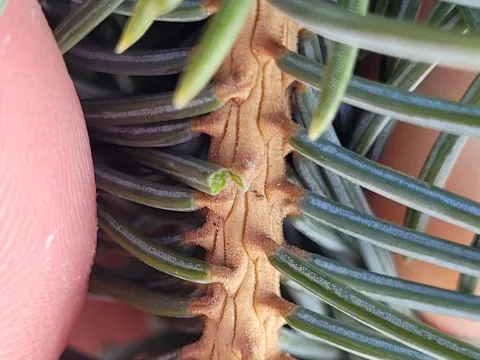

Engelmann spruce
Picea engelmannii Parry ex Engelm.
Description
Engelmann spruce (Picea engelmannii) is a majestic evergreen conifer belonging to the Pinaceae family. It is recognized for its dense, conical habit and needle-like foliage that often displays a beautiful blue-green or silvery hue. As a large-scale species, it represents a significant botanical asset for both commercial forestry and ornamental landscaping.
Originating from the high-altitude mountainous regions of western North America, this species thrives in subalpine zones. Its natural range demonstrates a remarkable tolerance for cold winters, heavy snowfall, and short growing seasons. When cultivated in appropriate regions, it adapts well to similar cool and moist environments, making it a reliable choice for temperate climate landscaping.
From a botanical perspective, the Engelmann spruce is distinguished by its thin, flexible twigs and papery-scaled cones that hang downwards. The needles are soft to the touch compared to some other spruce species and emit a sharp, resinous fragrance when crushed. The tree possesses a shallow root system, necessitating mulching to maintain soil moisture and temperature stability.
Agrotechnical requirements for Picea engelmannii involve well-drained, acidic soil that remains consistently moist. It prefers sites with good exposure to sunlight but benefits from protection against harsh, drying winds. Maintenance practices should focus on adequate irrigation during the first years of establishment and periodic pruning to remove damaged or diseased branches.
The economic and practical utility of this spruce is vast. The timber is lightweight and resonant, making it highly valued for the manufacturing of musical instruments, such as guitar soundboards. Beyond its industrial use, it serves as an essential component in erosion control and reforestation efforts in mountainous areas, while its aesthetic qualities make it a popular specimen in large parks and gardens.
Like all spruce species, it is susceptible to various threats, including pests such as spruce beetles and spider mites, which can proliferate in hot, dry conditions. Fungal diseases, such as needle cast, can affect trees planted in areas with poor air circulation or excessive soil humidity. Maintaining tree vigor through proper site selection and early detection of symptoms is the best defense strategy.
Photo gallery