
Description
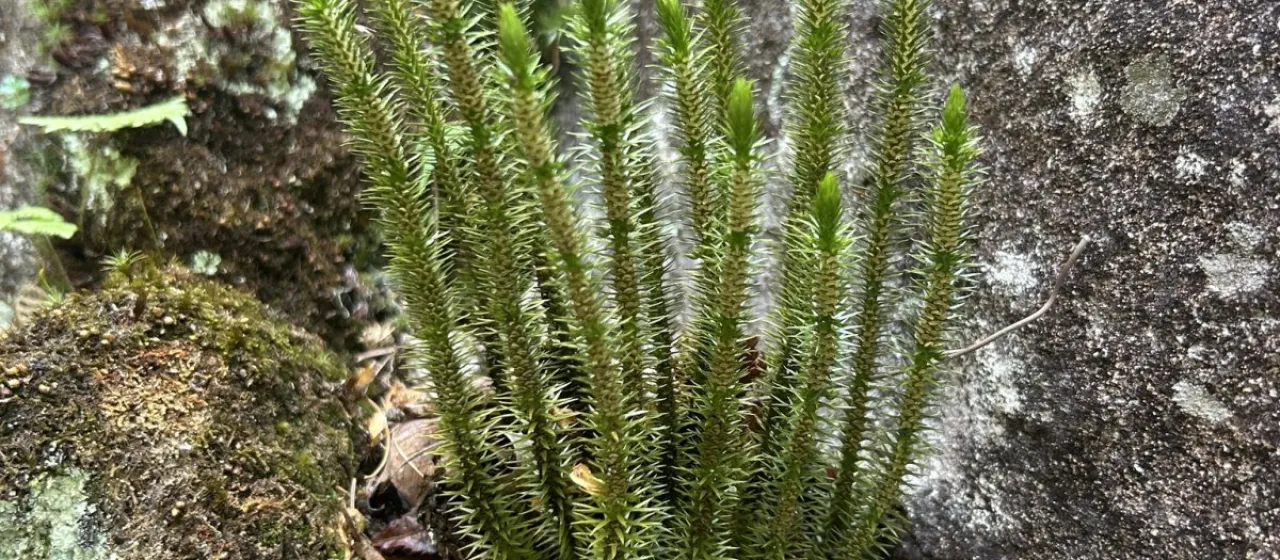
Arctic fir clubmoss (Huperzia arctica) is a perennial, spore-bearing plant belonging to the Huperziaceae family. It is a highly specialized species adapted to the harsh conditions of the Arctic and sub-Arctic regions, often found in tundra ecosystems where other vegetation struggles to survive.
The plant originates from the circumpolar regions of the Northern Hemisphere. Its distribution is focused on cold, moist habitats, primarily in the northern reaches of North America and Eurasia. Unlike traditional crops, it cannot be farmed commercially, as its biology relies on extremely slow maturation cycles and specific mycorrhizal associations.
Botanically, Huperzia arctica is characterized by its dichotomously branching, low-growing stems covered in small, linear-lanceolate leaves. This growth form protects the plant from wind desiccation and physical damage under snow cover during the long winter months. Sporangia are typically located in the axils of the leaves, facilitating reproduction through spores.
Environmental requirements for the species include nutrient-poor, acidic, and consistently damp soil. It thrives in areas with low competition from larger vascular plants. Attempting to cultivate this species requires mimicking the specific microclimate of the tundra, which is practically impossible in standard agricultural settings or greenhouses.
Economic use of the species is currently non-existent, and it remains a focus of conservation ecology rather than industrial agriculture. Common pests are rarely observed, as the extreme environmental stress limits the presence of typical plant pathogens. The survival of the species is primarily threatened by habitat loss rather than disease or insect infestation.