
Description
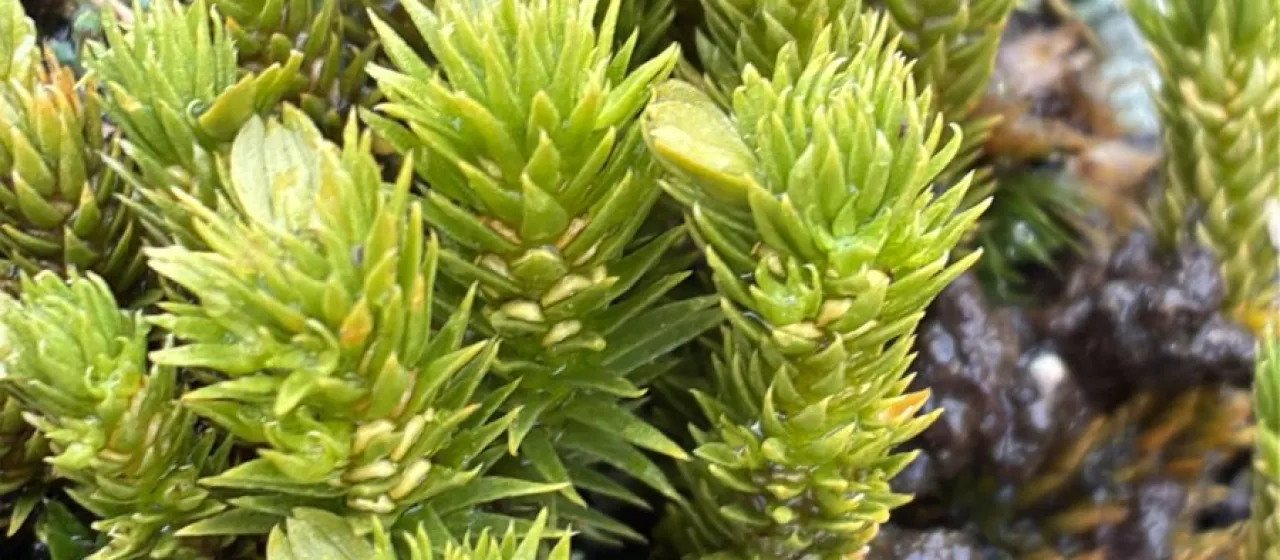
Fir clubmoss (Huperzia selago) is a perennial spore-bearing plant belonging to the Huperziaceae family. Unlike common clubmosses, it does not produce creeping stems but grows as a dense, upright tuft reaching up to 25 centimeters in height. Its stems are dichotomously branched, covered with numerous small leaves, with sporangia situated in the leaf axils along the stem.
The species has a wide distribution across the temperate and subarctic regions of the Northern Hemisphere, spanning across Europe, Asia, and North America. It thrives in humid coniferous forests, mountain heaths, and rocky slopes. Because it is highly sensitive to soil chemistry and humidity levels, it is frequently used by ecologists as a bioindicator for forest health.
Cultivation of Huperzia selago is notoriously difficult due to its strict biological requirements. The plant depends on symbiotic mycorrhizal fungi in the soil for nutrient uptake and germination. It requires acidic, humus-rich soil and constant moisture with a cool microclimate, making it almost impossible to maintain in standard garden conditions without expert-level specialized equipment.
The economic and medicinal interest in fir clubmoss is centered on the alkaloid Huperzine A. This substance is a potent acetylcholinesterase inhibitor currently being researched for the treatment of Alzheimer's disease and other cognitive impairments. Due to the plant's extremely slow growth rate and the potential for ecological damage, wild harvesting is heavily regulated or prohibited in most countries.
The conservation status of the fir clubmoss is precarious, as the plant is vulnerable to habitat loss and environmental pollution. Common phytopathological issues include fungal blights that develop during periods of poor air circulation or excessive waterlogging. Future production of its medicinal components relies heavily on biotechnological advancements and laboratory-based propagation rather than field cultivation.