Fever hydrangea
Hydrangea febrifuga (Lour.) Y. De Smet & C. Granados
Description
Fever hydrangea (Hydrangea febrifuga) is a perennial shrub species belonging to the Hydrangeaceae family. Historically categorized as Dichroa febrifuga, this plant has played a significant role in traditional Asian medicine for centuries, earning its specific epithet due to its perceived febrifuge properties.
The native range of this species extends across the high-altitude forests of Asia, including China, Nepal, India, and parts of the Philippines and Indonesia. It thrives in humid, shaded forest understories, often growing near streams or in areas with consistent moisture levels throughout the year.
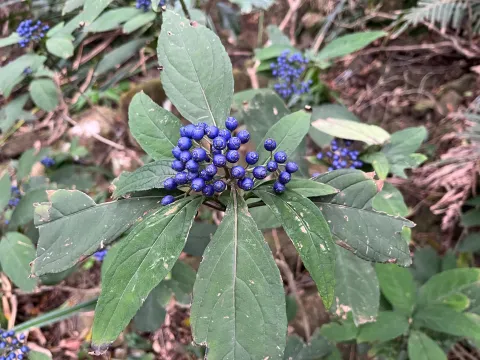
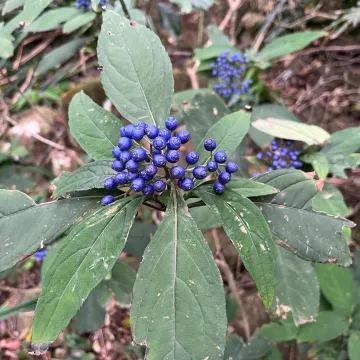
Botanically, it is a robust evergreen shrub that can grow up to three meters in height. The foliage is typically lanceolate to elliptical with serrated margins. A defining feature of the plant is its spectacular display of blue, star-shaped flowers that transition into striking, glossy blue berries, which remain on the branches for an extended period.
Cultivation requires careful attention to soil acidity and moisture. Fever hydrangea performs best in rich, organic, acidic soils that provide excellent drainage while maintaining constant dampness. As a species native to forest environments, it demands protection from harsh afternoon sun and wind, thriving best in dappled shade or eastern-facing garden exposures.
In terms of economic and practical use, the plant is primarily studied for its secondary metabolites, particularly febrifugine and isofebrifugine, which are of great interest in pharmacological research. Beyond its medical applications, it is increasingly valued by specialized gardeners for its distinct structural form, year-round foliage, and the dramatic contrast of its blue fruit.
- Requires consistent moisture and high humidity.
- Prefers acidic, nutrient-rich soil.
- Thrives in dappled or full shade.
- Vulnerable to extreme frost and drought.
- Noted for both ornamental flowers and fruits.
Photo gallery