Japanese hydrangea vine
Hydrangea hydrangeoides (Siebold & Zucc.) Bernd Schulz
Description
The Japanese hydrangea vine (Hydrangea hydrangeoides) is a unique, vigorous climbing shrub belonging to the Hydrangeaceae family. Unlike standard hydrangea bushes, this species is specialized for vertical growth, utilizing aerial rootlets to cling to walls, fences, and tree trunks, allowing it to reach heights of up to 15 meters.
Originating from the temperate forests of East Asia, including Japan and the Kuril Islands, this plant has adapted to thrive in cool, moist, and shaded environments. Its natural habitat is typically characterized by rich, organic-heavy forest floors, which dictates its specific requirements in cultivation.
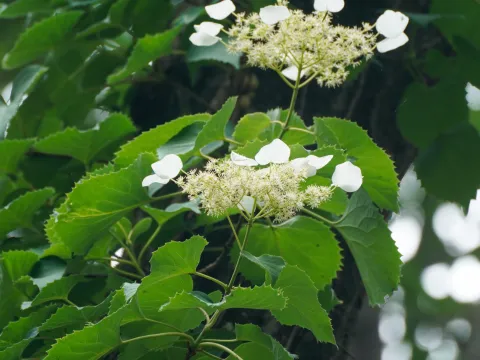
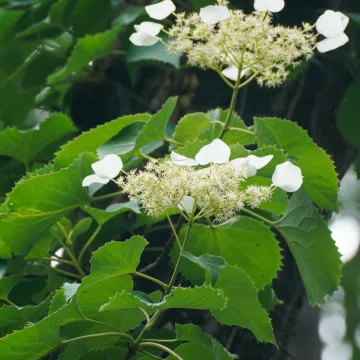
Botanically, the plant features heart-shaped leaves that turn a vibrant yellow in autumn, providing seasonal interest. The flowers are arranged in large, lacecap-like clusters, with fertile inner flowers surrounded by showy, white sterile florets that emit a subtle, pleasant fragrance throughout the blooming season.
For successful growth, gardeners must provide moist, well-draining, and acidic soil conditions. The plant is particularly demanding regarding hydration; therefore, installing a consistent irrigation system or using organic mulch to retain soil moisture is essential, especially during the plant's establishment phase in the first few years.
In landscaping, it is highly valued for covering north-facing walls where other plants struggle. Regarding maintenance, gardeners should watch for common pests such as spider mites and aphids, which can appear in dry conditions. Proper pruning involves trimming back wayward growth in late winter or early spring to encourage dense foliage.
Photo gallery