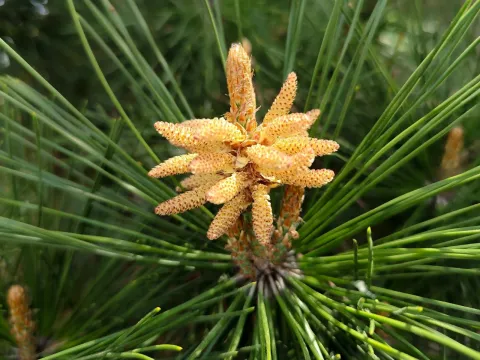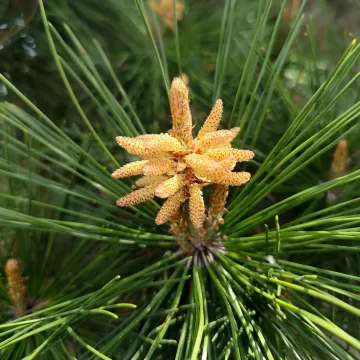
Japanese red pine
Pinus densiflora Siebold & Zucc.
Description
Japanese red pine (Pinus densiflora), also known as the funeral pine, is a prominent member of the Pinaceae family. It is a slow-growing evergreen conifer recognized by its striking orange-red exfoliating bark and graceful, spreading canopy that provides year-round visual interest in both garden and forest settings.
Native to Japan, Korea, China, and the Russian Far East, this species is well-adapted to mountainous terrains. It has been historically significant in Eastern culture, often symbolizing longevity. Today, it is widely propagated across temperate zones for its resilience and ability to thrive in various soil types, provided the drainage is adequate.
Botanically, the tree produces needles in bundles of two, typically 8 to 12 centimeters in length. The cones are small, conical, and brown when mature. The tree's structure is highly variable, ranging from tall, straight-trunked specimens in forest environments to artistic, wind-swept shapes often seen in ornamental Japanese gardens or miniature bonsai forms.
The cultivation of this species requires full sun and well-drained, slightly acidic soil. Unlike some other pines, it requires moderate soil moisture. Agronomic management involves regular pruning to maintain the desired density of the canopy and specialized fertilization during the spring to encourage robust new growth. It is relatively cold-hardy, though young saplings may require protection from harsh winter winds.
- Distinctive, attractive reddish-orange bark.
- Versatile in landscape design and bonsai art.
- Adaptable to a range of environmental conditions.
- Provides excellent habitat for local biodiversity.
Common pests include aphids, scale insects, and pine bark beetles, which necessitate monitoring and integrated pest management practices. Diseases such as needle cast or fungal rusts can occur in areas with poor airflow or persistent high humidity. Maintaining soil health and applying preventative fungicides are key to ensuring the longevity and health of the Japanese red pine.
Photo gallery