Lodgepole pine
Pinus contorta Douglas ex Loudon var. latifolia Engelm. ex S. Watson
Description
Lodgepole pine (Pinus contorta var. latifolia) is an evergreen coniferous species belonging to the Pinaceae family. It is recognized as one of the most commercially important tree species in North America, valued for its rapid growth rate and straight, slender trunk characteristics which once made it an ideal material for lodge poles used by Native American tribes.
The native range of this species extends across western North America, from Alaska down to the Rocky Mountains. Due to its adaptability to diverse environmental conditions, including poor nutrient-rich soils and high altitudes, it has been successfully introduced into parts of Europe and New Zealand, where it is primarily managed for forest plantation purposes.
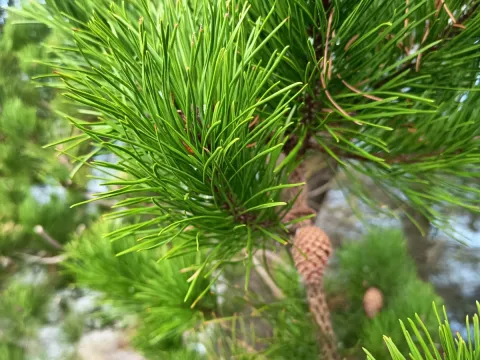
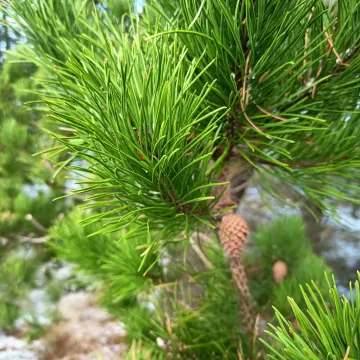
From a botanical perspective, the lodgepole pine is distinguished by its paired, twisted needles and small, often serotinous cones that remain closed until exposed to significant heat. The tree typically maintains a narrow, pyramidal form, though it can become irregular when growing in dense, overcrowded stands typical of high-density silvicultural plantations.
Silvicultural requirements emphasize the need for full sunlight and well-drained substrate. While the tree can thrive in rocky, sandy, or volcanic soils, it does not tolerate waterlogged sites. Proper plantation management involves thinning the stands to ensure adequate airflow and light penetration, which helps reduce the risk of competition-induced stress.
Economic applications are centered on the timber industry, providing high-quality wood for framing, construction, and pulp production. Additionally, the species serves an important ecological role in ecosystem restoration and reforestation of areas affected by wildfires, given its evolutionary adaptation to regeneration after fire events.
- Excellent growth performance in cool, temperate climates.
- High tolerance to nutrient-poor soil conditions.
- Vulnerability to mountain pine beetle and dwarf mistletoe infestations.
- Importance of regular forest health surveys for pest control.
Photo gallery