Mountain pine
Pinus uncinata Mill. ex Mirb.
Description
The mountain pine (Pinus uncinata), or hooked pine, is an evergreen conifer belonging to the Pinaceae family. It is widely recognized for its robust nature and is often classified as a subspecies of Pinus mugo. This plant is valued by gardeners and foresters alike for its architectural shape and extreme environmental tolerance.
The native distribution of this species is centered in the mountains of Central and Western Europe, specifically the Pyrenees and the Alps. Adapted to high-altitude environments, the species thrives in rocky, thin soils and withstands harsh winter conditions, including heavy snow loads and sub-zero temperatures, which define its strong survival mechanism.
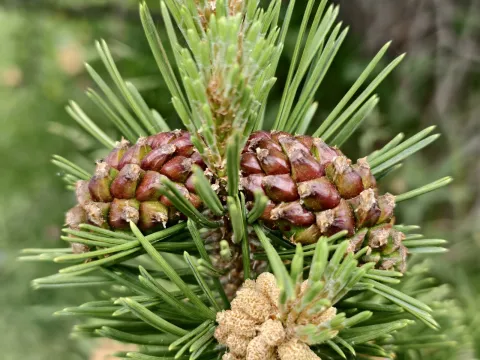
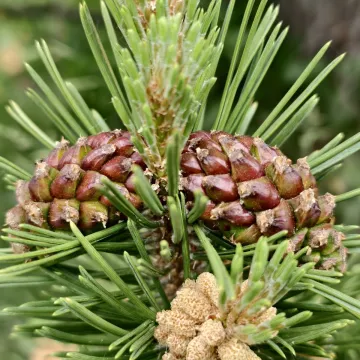
Botanically, the mountain pine features dense, dark green needles occurring in pairs and characteristic cones with hooked scales. These structures protect the seeds from extreme weather and help the species propagate in rugged terrain. The tree has a slow growth habit, leading to a long lifespan and persistent, dense foliage that remains attractive throughout the year.
Regarding agrotechnical requirements, this species demands well-draining soil and a sunny location to maintain its health and color. It is sensitive to waterlogged conditions, which can lead to root rot. Successful cultivation involves selecting sites with neutral to slightly acidic soil and ensuring adequate space for the root system to spread, which is crucial for the stability of the plant.
Economically and horticulturally, Pinus uncinata is extensively used for slope stabilization, mountain reforestation, and ornamental gardening. It is an ideal specimen for rock gardens or alpine landscaping due to its resilience to wind and cold. Furthermore, it is resistant to many common pests, though in humid environments, fungal monitoring is recommended to ensure long-term vitality.
Photo gallery