
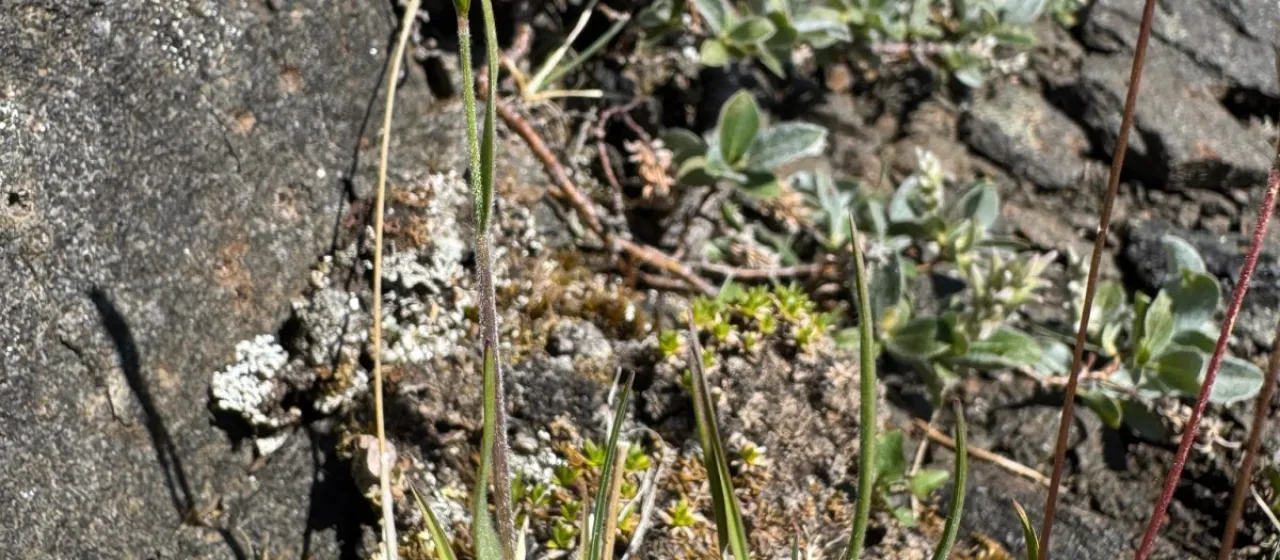
Description
Prairie junegrass (lat. Koeleria spicata, often referred to as Koeleria macrantha) is a perennial bunchgrass belonging to the Poaceae family. This species is highly regarded for its resilience, ability to thrive in challenging climates, and its role as a key component of diverse grassland ecosystems.
Its native range is extensive, covering vast areas of the northern hemisphere including North America and Eurasia. It is particularly well-adapted to prairie and steppe environments, where it serves as a critical species for soil stabilization and ecological restoration projects in semi-arid regions.
Botanically, it forms dense tufts of narrow, basal leaves that provide excellent ground cover. The inflorescence is a dense, spike-like panicle that appears in late spring to early summer, which is a distinctive feature identifying the plant during its peak growth phase.
Regarding cultivation requirements, it performs best in well-drained soils, ranging from sandy loams to rocky substrates. It is exceptionally drought-tolerant and cold-hardy, making it a low-maintenance choice for dryland management. However, it requires good air circulation and fails in waterlogged or overly compacted soil conditions.
The primary economic use is as a quality forage grass for livestock, including cattle, sheep, and horses, as it provides nutritious grazing early in the season. Management practices should monitor for common grass diseases such as rust or smut, which can occasionally affect stands, particularly in areas with poor airflow or high humidity.