
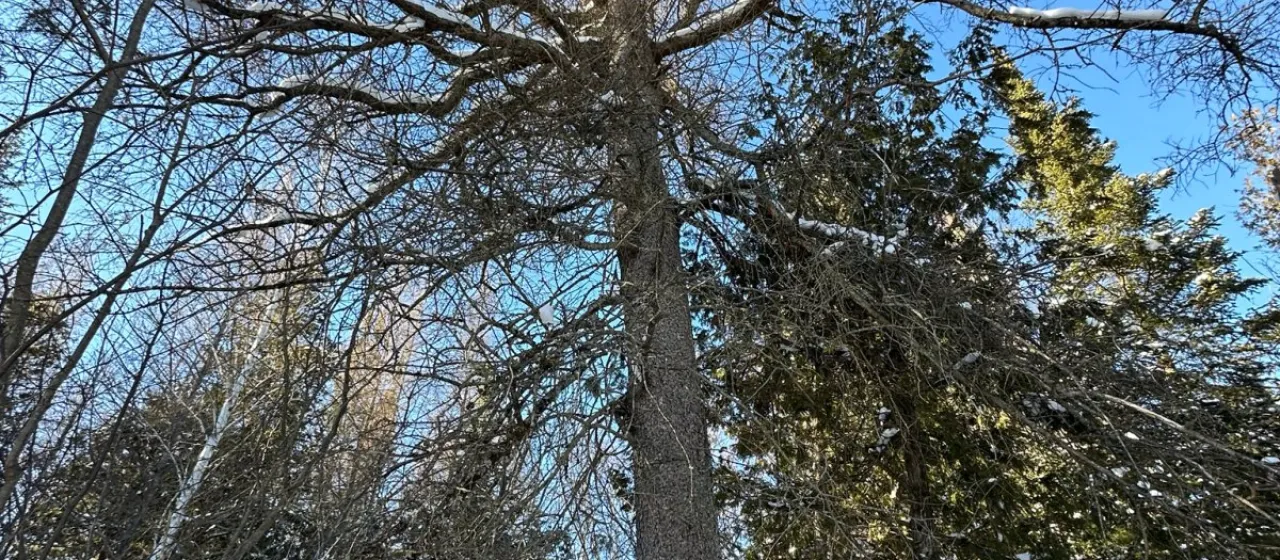
Description
The American larch (Larix laricina) is a coniferous tree species belonging to the Pinaceae family. Known for its deciduous nature, it is unique among conifers in North America for shedding its needles each autumn, preparing it for the harsh winters characteristic of its native boreal zones.
The native range of this species extends across much of Canada, moving into the northern United States, including Alaska. It thrives in diverse environments, from nutrient-poor peat bogs and swamps to well-drained upland soils, showcasing a remarkable ability to adapt to varying moisture regimes.
Botanically, the tree features a narrow, pyramidal crown and soft, glaucous-green needles arranged in fascicles of 10 to 20. Its cones are notably small, rounded, and contain few scales. The species is characterized by a shallow root system, making it well-adapted to areas with high water tables or thin, rocky soils.
Successful silviculture requires full sunlight, as the species is highly intolerant of shade. It prefers cool, moist, and acidic soils. While it can survive in nutrient-poor environments, optimal growth is achieved in deep, moist, organic-rich soils where moisture is consistently available throughout the growing season.
The economic value of American larch lies in its heavy, strong, and rot-resistant wood. It is widely used for fence posts, utility poles, railroad ties, and general construction. Management practices often focus on controlling defoliating insects like the larch sawfly and monitoring for needle-cast diseases that can impact tree vigor.