
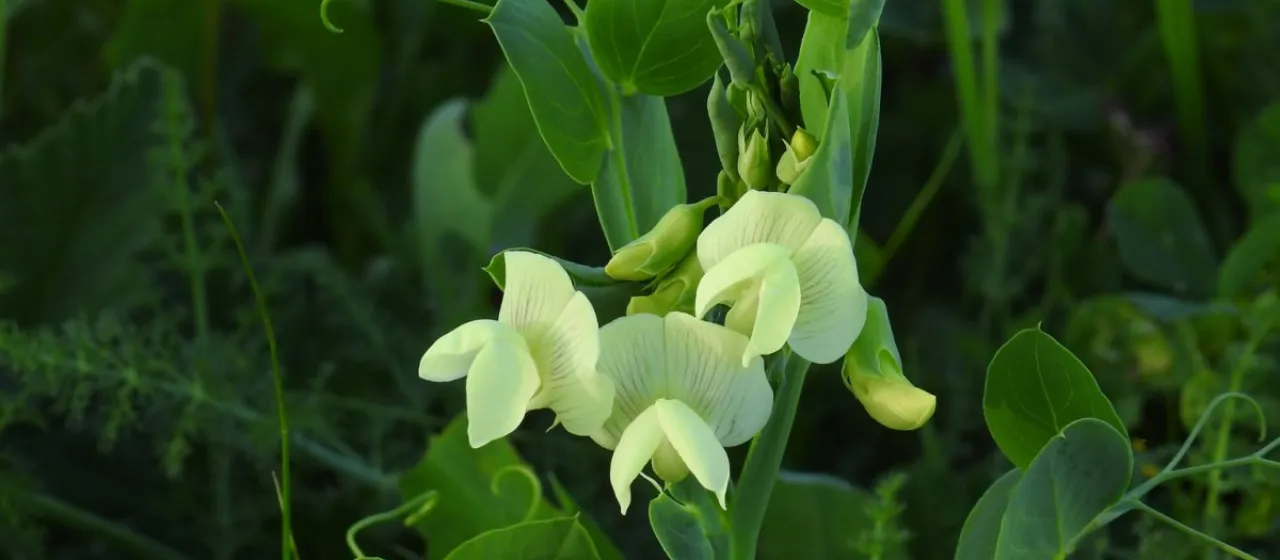
Description
The ochrus pea (Lathyrus ochrus (L.) DC.) is an annual leguminous crop belonging to the Fabaceae family. Historically recognized in the Mediterranean region, this plant is primarily utilized for its high-protein biomass and seeds, which serve as an excellent source of feed for livestock in various agricultural systems.
Originating from the Mediterranean basin, the ochrus pea has adapted to mild, wet winters and dry, warm summers. It is typically found in regions where the climate allows for winter cropping, helping to maximize land productivity during seasons when other crops might struggle with water availability or heat stress.
Botanically, the plant is characterized by its sprawling or climbing stems and unique, large stipules that often appear more prominent than the leaflets themselves. The flowers exhibit the typical papilionaceous shape, displaying a distinct yellowish-ochre color. Following successful pollination, the plant develops pods containing seeds that are rich in starch and protein.
Regarding cultivation requirements, the ochrus pea thrives in well-drained, fertile soils ranging from sandy loams to heavier clay-based soils, provided they are not waterlogged. Agrotechnical management involves timely seeding at the beginning of the growing season and ensuring the soil has sufficient nutrients, particularly phosphorus and potassium, to support the development of nitrogen-fixing nodules.
Economically, the crop is valued for its versatility: it can be harvested for fresh green fodder, dried hay, or left to mature for seed production. Furthermore, its ability to fix atmospheric nitrogen makes it an excellent choice for soil improvement in rotation. Common challenges include fungal diseases like powdery mildew and attacks from specific legume pests, necessitating integrated pest management strategies to secure healthy yields.