
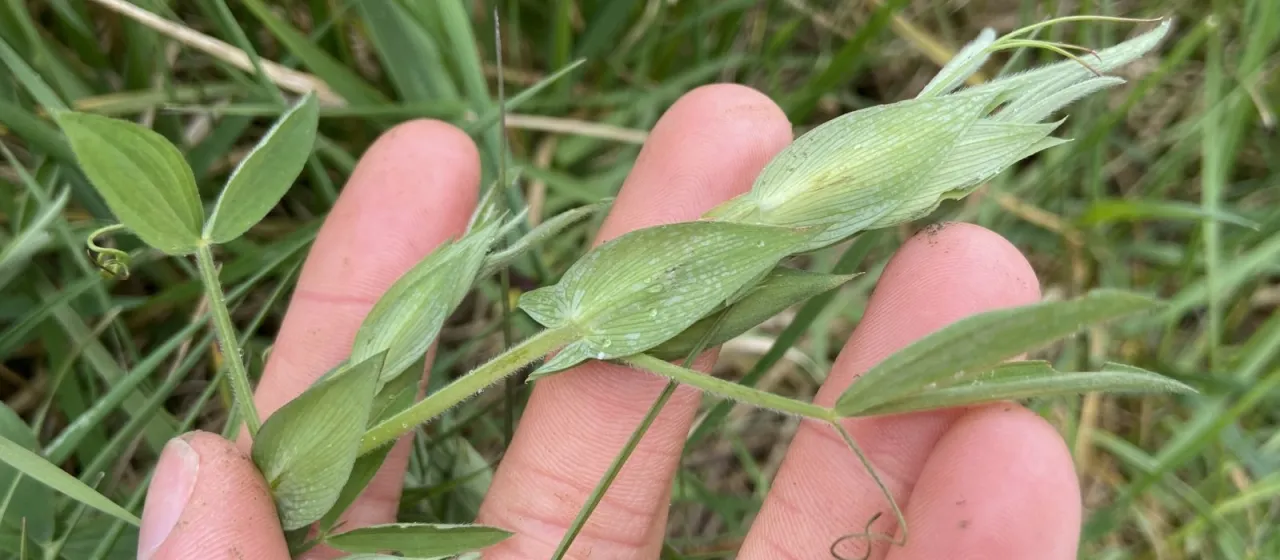
Description
Meadow vetchling, known botanically as Lathyrus pratensis L., is a perennial legume species highly valued in agriculture for its significant protein content and ability to improve soil nitrogen levels. It serves as a vital component of sustainable pasture and hayland management systems.
Originating from Europe and temperate regions of Asia, the plant has a wide natural range and thrives in diverse habitats including meadows, forest edges, and grasslands. Its ability to adapt to varying moisture conditions makes it a versatile species for agricultural use in temperate climates.
The plant features a climbing habit, with pinnate leaves that terminate in tendrils, allowing it to support itself against neighboring vegetation. It grows up to one meter in height and produces distinctive bright yellow flowers clustered in racemes. The root system is deep and complex, contributing to the plant's overall resilience.
Meadow vetchling prefers fertile, well-drained loamy soils but displays remarkable tolerance to slightly wetter environments. Cultivation requires careful seedbed preparation and early weed management to ensure establishment. Once established, it requires minimal intervention, though periodic management of mowing heights is essential to maintain stand vigor.
Economically, it is primarily used as high-quality forage for livestock, offering a rich source of nutrients. Farmers often integrate it into forage mixtures to enhance the feed quality of hay. While generally robust, the crop is susceptible to certain pressures:
- Powdery mildew and various rust diseases.
- Aphid infestations affecting vegetative growth.
- Weevil damage to leaves and reproductive parts.