Oak-leaf hydrangea
Hydrangea quercifolia W. Bartram
Description
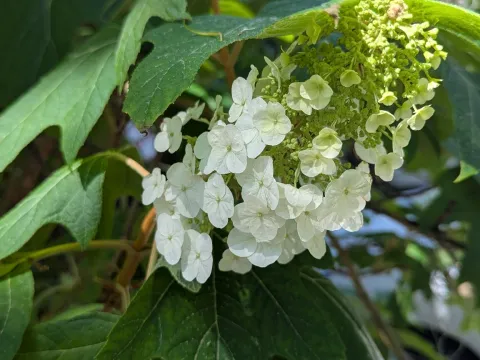
The oak-leaf hydrangea (Hydrangea quercifolia) is a deciduous shrub species belonging to the Hydrangeaceae family. It is highly valued in horticulture for its distinct lobed leaves that resemble those of an oak tree, providing spectacular foliage color changes from deep green to rich shades of bronze, crimson, or purple during the autumn months.
Native to the southeastern United States, this species is typically found in shaded woodlands, ravines, and moist slopes. Its native habitat indicates a preference for temperate climates with adequate humidity, although it has proven to be a versatile and resilient ornamental plant suitable for various garden settings across different zones.
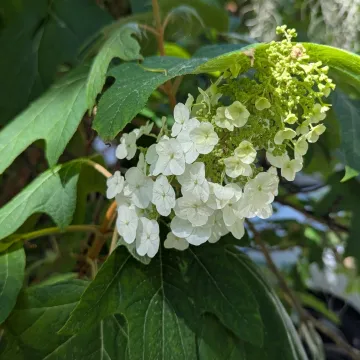
Botanically, the plant features a woody stem structure reaching 1 to 3 meters in height. Its panicle-shaped inflorescences appear in late spring or early summer, consisting of numerous creamy-white sterile florets and fertile flowers. As the season progresses, these white blooms often fade to pink or brownish-green, providing interest well into the winter.
Cultural requirements for success include planting in well-drained, humus-rich soil that maintains moisture without becoming waterlogged. While it can tolerate some sun, it performs best in partial shade, especially in hotter regions. Maintenance involves consistent watering, regular mulching to protect the root system, and minimal pruning to maintain shape.
The primary use of Hydrangea quercifolia is in landscaping as a specimen shrub, part of a border, or within a woodland-style garden. While generally robust, it can be susceptible to common issues including leaf spot, powdery mildew, and aphids. Proper air circulation and balanced soil pH are critical for preventing most of these physiological and pathogenic problems.
Photo gallery