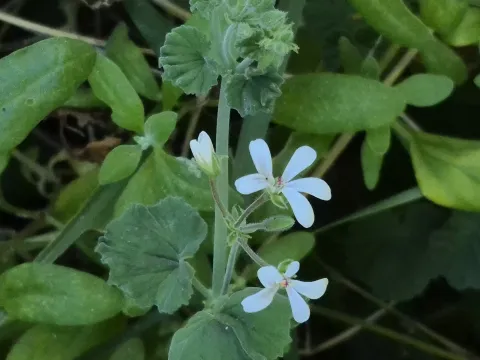
Apple geranium
Pelargonium odoratissimum
Description
Apple geranium (lat. Pelargonium odoratissimum) is a perennial herbaceous plant belonging to the Geraniaceae family. This species is widely recognized for its apple-scented foliage, which secretes essential oils when brushed or crushed. Unlike traditional ornamental geraniums, this specific cultivar is primarily valued for its intense aromatic properties rather than floral display.
The plant originates from South Africa, flourishing in regions with stable warm temperatures and significant sunlight exposure. Commercially, it is cultivated in subtropical climates suitable for essential oil production. In colder regions, it is grown primarily as a container plant or a seasonal crop in greenhouses, as it cannot withstand frost or freezing winter conditions.
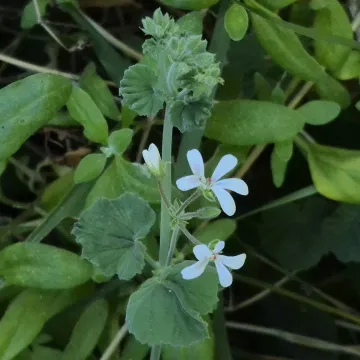
Botanically, it features sprawling or ascending stems with small, rounded, and slightly velvety leaves that give off a fresh, crisp scent. The flowers are small, often white or pale pink, arranged in loose umbels. The root system is relatively shallow, requiring well-aerated media that facilitates both moisture retention and proper drainage to prevent waterlogging.
Agricultural requirements focus on providing high-quality, well-draining soil with a neutral to slightly acidic pH level. High light intensity is crucial for the development of aromatic compounds in the leaves. During the peak growing season, regular fertilization is recommended, though nitrogen levels should be managed to prevent excessive foliage growth at the expense of scent quality.
The primary commercial use of the plant involves the extraction of essential oils, which are utilized in the perfume, food, and cosmetic industries. Furthermore, the plant is often employed as a natural repellent in gardens and indoor spaces. Its antimicrobial properties make it a subject of interest for herbal medicine and various aromatherapy applications.
Key pests and diseases often affecting this crop include:
- Spider mites and whiteflies, especially in environments with low humidity.
- Root rot caused by stagnant water or compacted soil.
- Gray mold (Botrytis cinerea), which can occur if airflow around the foliage is insufficient.
Photo gallery