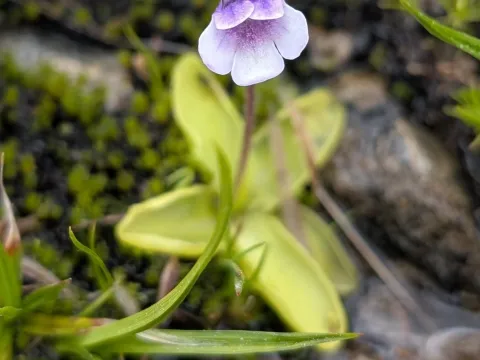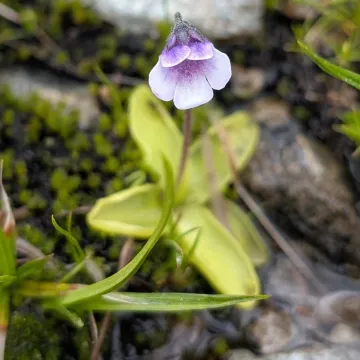
Balkan butterwort
Pinguicula balcanica
Description
The Balkan butterwort (Pinguicula balcanica) is a carnivorous plant species belonging to the Lentibulariaceae family. It is a specialized botanical organism that has evolved to capture and digest insects to supplement its nitrogen intake, making it a highly interesting subject for botanical research and cultivation.
Native to the Balkan Peninsula, this species typically inhabits high-altitude meadows, rocky crevices, and limestone cliffs. Its natural habitat dictates specific requirements for cultivation, focusing on mimicry of cool, damp, and well-aerated environments found within its native alpine range.
Botanically, the plant features a basal rosette of succulent leaves. These leaves are covered in specialized sticky glands that produce mucilage to entrap small insects and digestive enzymes to break them down. The plant's root system is generally modest, serving primarily for anchorage and water uptake.
Cultivation requires adherence to strict horticultural protocols. Use a nutrient-poor substrate, such as a mix of peat moss and perlite, ensuring it remains constantly moist with distilled or rainwater. Avoid the use of fertilizers, as excess minerals can cause leaf burning and root system failure.
In terms of practical use, the Balkan butterwort is primarily utilized in horticultural trade for specialized collections and botanical displays. Its ability to capture small gnats makes it a functional addition to environments where insect control is managed through biological rather than chemical means.
- Light requirements: Bright indirect light.
- Watering: Tray method using only distilled water.
- Soil pH: Naturally acidic environments.
- Dormancy: Requires a winter cooling period for plant health.
Photo gallery