Corsican butterwort
Pinguicula corsica
Description
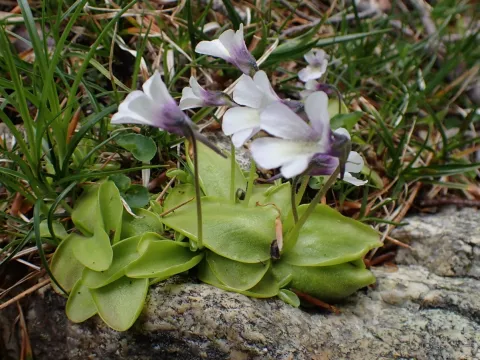
Corsican butterwort (Pinguicula corsica) is a perennial carnivorous plant species belonging to the Lentibulariaceae family. This plant is a specialized organism that has evolved to thrive in nutrient-poor alpine environments, securing essential nitrogen by capturing small insects on its specialized glandular foliage.
The native distribution of this species is restricted to the mountainous regions of Corsica. It is primarily found in high-altitude environments, growing on wet rocky slopes and along the edges of mountain streams where the air humidity is high and the substrate is perpetually cool and moist throughout the growing season.
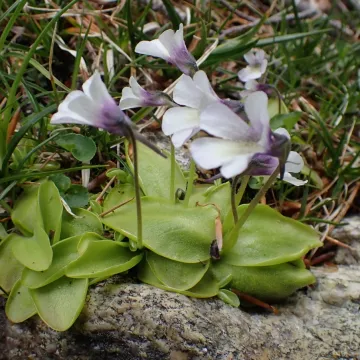
Botanically, Pinguicula corsica forms a rosette of fleshy, sticky leaves that serve as a trap for prey. In the spring and summer, it produces attractive violet-purple flowers on long, slender stalks. Its growth habit is perfectly adapted to withstand the harsh, fluctuating temperatures of its high-mountain habitat, often entering a dormant period during the winter months.
Regarding its horticultural requirements, cultivation is quite demanding. The plant requires a specialized mineral-free substrate, such as a mix of peat moss and perlite. The most critical factor is the use of pure, distilled, or rainwater for hydration, as tap water containing minerals can quickly lead to the decline of the plant's sensitive root system. It requires bright, indirect light and a well-ventilated environment to prevent fungal infections.
In terms of agricultural and research utility, the plant is primarily cultivated in botanical institutions and by specialized hobbyists. Common pests include aphids and mealybugs, which are problematic due to their potential to damage the delicate leaf surface. Effective management requires constant monitoring and high hygiene standards to prevent the development of root rots and other physiological disorders related to sub-optimal climate control.
Photo gallery