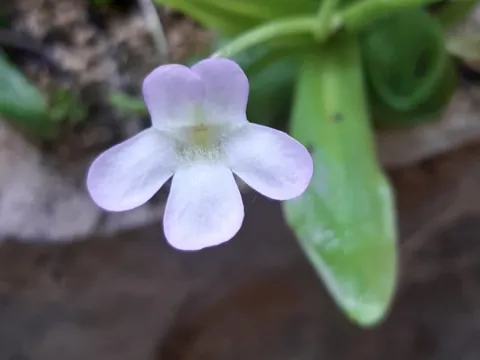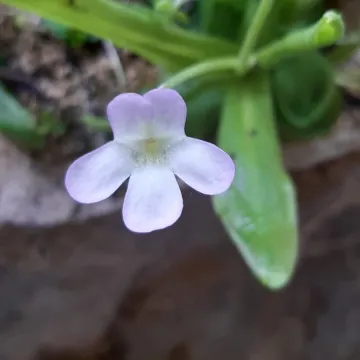
Vallisneria-leaved butterwort
Pinguicula vallisneriifolia
Description
The Vallisneria-leaved butterwort (Pinguicula vallisneriifolia) is a rare species of carnivorous plant within the Lentibulariaceae family. Unlike standard agricultural crops, this plant is categorized as a niche ornamental specimen, primarily cultivated by enthusiasts of exotic flora and botanical research institutions.
The species originates from the mountainous regions of Spain, where it naturally occupies limestone cliffs and moist rocky slopes. Its habitat is characterized by poor substrate quality, forcing the plant to evolve specialized carnivorous traits to obtain necessary nitrogen. By utilizing sticky glandular hairs on its leaves, the plant traps and digests small insects, allowing it to thrive where other vegetation struggles.
Botanically, the plant is distinguished by its long, slender leaves forming a dense rosette, which bears a striking resemblance to aquatic Vallisneria. During the blooming season, it produces solitary flowers on elevated stalks, ranging from soft pink to violet. Its root system is quite delicate, serving primarily for water uptake and anchorage rather than nutrient absorption from the soil.
Cultivation requires strict adherence to specific environmental parameters. Growers must provide a substrate consisting of a loose, nutrient-poor mix, typically involving peat and lime-rich additives to simulate its natural geological environment. Watering must be done using pure, mineral-free water, ensuring the soil remains consistently moist but not waterlogged to prevent root rot.
Common pests include aphids and mealybugs, which must be managed with caution given the plant's sensitivity to chemical pesticides. Fungal diseases often arise due to poor ventilation or stagnant conditions. While not a commercial crop for food, Pinguicula vallisneriifolia holds significant value in biological studies concerning plant adaptation and sustainable horticulture of rare species.
Photo gallery