Plagiothecium succulentum
Plagiothecium succulentum
Description
Plagiothecium succulentum is a species of pleurocarpous moss belonging to the Plagiotheciaceae family. While not a conventional agricultural crop, it serves as a specialized plant species utilized in ecological restoration, ornamental horticulture, and scientific research into bryophyte biodiversity.
This moss is naturally distributed across the temperate regions of the Northern Hemisphere. It thrives in shaded, moist environments, often establishing itself on humus-rich soils, decaying wood, or shaded rocky substrates. Its geographical range suggests a high degree of plasticity regarding temperature, provided that humidity levels remain consistently high.
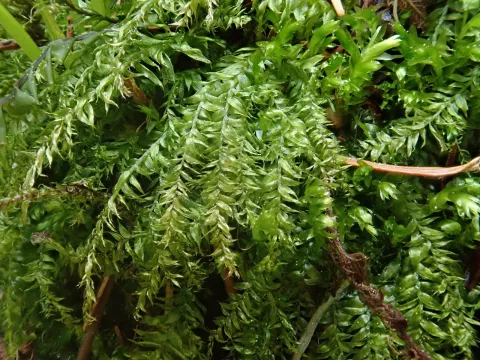
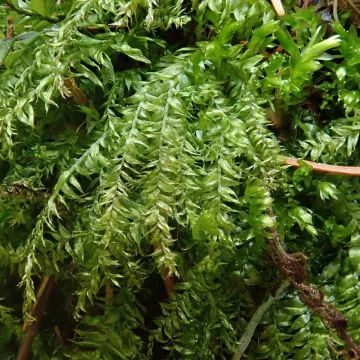
Botanically, the species is defined by its glossy, succulent-looking foliage and creeping, flat stems that form dense, carpet-like mats. The leaves are typically ovate-lanceolate and possess a distinct shiny sheen, which is an adaptation to capture diffuse light under dense forest canopies. The plant exhibits a prostrate growth habit, which aids in water retention within its immediate micro-environment.
In terms of cultivation, Plagiothecium succulentum requires a shaded location with high ambient humidity. The growing medium should be well-drained but moisture-retentive, such as a mix of peat, bark, and mineral components. Cultivation techniques focus on maintaining stable moisture levels through misting or high-humidity enclosures, avoiding direct sunlight that could lead to desiccation.
In practice, the species is highly valued in the creation of indoor terrariums, vivariums, and paludariums. It is also used as a ground-covering plant for shaded rock gardens in temperate climates. While it is generally resistant to standard agricultural pests, careful monitoring for mold or algal growth is required in closed systems, where poor ventilation can trigger fungal outbreaks.
Photo gallery